A Year On….

It’s just over a year since A Last Journey was published and it’s been quite a year. I’ve been busy giving talks and readings all over Scotland to dementia groups, carers, Meeting Centres, the University of the Third Age, and Probus. I’ve been on the radio and taken part in an online seminar at Dundee University.

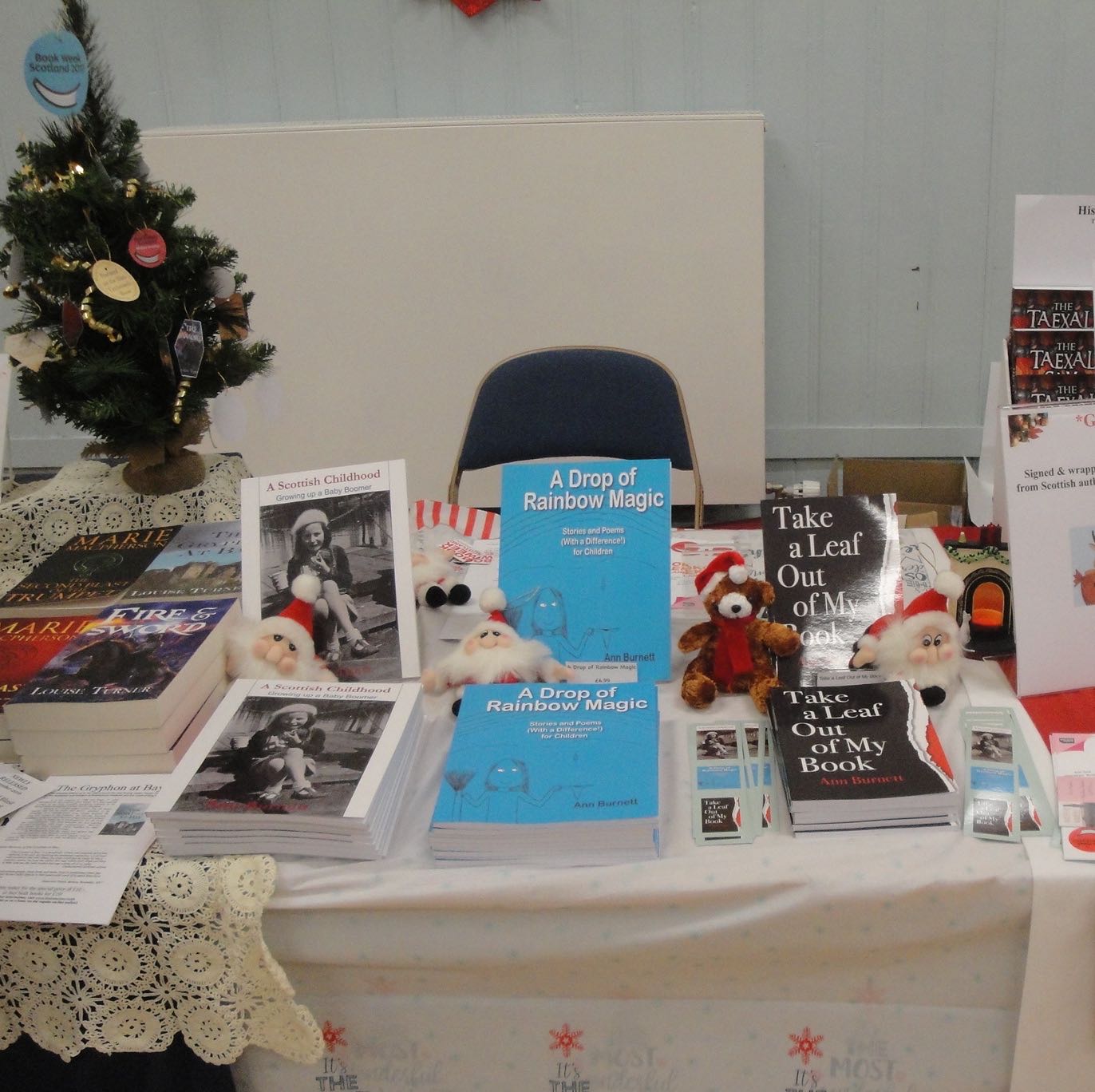
Setting up ready for a talk

My most recent talk was at Probus in Longniddry with a very receptive audience.

I’m also a member of Edinburgh Festival Theatre’s Focus group for their dementia programme and discuss and suggest ideas with them. I also write the Hidden Lives column for their DementiArts magazine.

And to add even more, I’m part of the Haddington singing group who entertain at care homes and other social groups throughout East Lothian.

No wonder it’s been a busy and very satisfying year!

Celebrating Robert Burns -and not forgetting Jean Armour

Jean Armour was Burns’s long suffering wife who scarcely rates in the Burns hagiography but who deserves to be remembered and appreciated for all she did for him. I wrote a poem about her when doing my Masters in Creative Writing at Glasgow University.

A widow reminisces on the occasion of her late husband’s birthday

He wisnae much use as a husband, mind.
Oh aye, he was a charmer,
Ask any lassie for miles aboot,
See it in eyes o weans scattered aw roun.
But reliable, naw. A guid provider naw.
Too fu o ideas and thochts and thinking, no enough hard labour.
Left me wi a newborn and a debt to pay, 
A book o verse and scribblins, sangs and bawdy lines
That entertained his cronies many a night
While I watched the weans and stoked the flames o wrath and regret.
Too fu o radical thoughts that had the long finger pointin and 
Murmurins o treason and revolution,
Too fu o lust and adulterous fornication 
for the black coated kirk to stomach, 
Often too fu.
No, no a guid husband as you’d cry it,
But whit a man.

My friend, Catherine Czerkawska, has written too about Jean Armour. Her book, The Jewel, about her is available on Amazon.

And I wrote a fantasy story about Burns and the sycophantic fans he seems to accrue!

A Man’s a Man for a’ that!

Surely the most appropriate person to invite to the Robert Burns Celebration Festival was Robert Burns himself.

It was my duty and pleasure to invite him. I have studied his works for many years and devoted my life to the reading of his poetry. He has been my hero (what an overused word to describe my obsession with him and his work) and the opportunity to meet him would be the highlight of my whole life. Nothing was too much for me as far as he was concerned. In fact, I was prepared to die for him.

It took a bit of arranging. Time of my death, whether temporary or permanent, manner of death, where exactly he was, were all matters I discussed with the agent. Despite some trouble with the seventh commandment, the adultery one, he had in fact been accepted above and not consigned to that other place.

The date was set for my demise. I concentrated hard on what my first words to the bard should be. It was while I was turning over such weighty questions that I stepped out in front of the number 77 Express bus to Glasgow.

Despite knowing that this was the day, a surge of anger at the incompetence of drivers rose in me and I managed a weak shake of my fist at the underside of the bus before I succumbed.

I must confess to being keen to see the pearly gates and St Peter with his open ledger, so I was extremely disappointed to find myself outside what looked like the entrance to an NCP car park. A metal pole blocked my way and in a small porter’s lodge sat someone with his face hidden behind a copy of a newspaper (it was the Glasgow Herald appropriately enough) and his feet on the table.

I tapped sharply on the window. 

‘Yes?’

‘Are you St Peter?’

‘No, I’m St Leger. It’s St Peter’s day off. What do you want?’

I showed him my special pass and he consulted a scruffy piece of paper decorated with coffee rings.

‘Right, you can go in.’

He pressed a button and the barrier rose.

I walked into Heaven. I was enraptured. Now, where would I find my hero?

An angel was hovering nearby, picking his nose I was horrified to note, so I tapped him brusquely on the wing.

 ‘Can you tell me where I can find Robert Burns?’

‘Which one? Robert Burns, plumber and heating engineer, Robert Burns, the dearly beloved infant son of Margaret, Robert Burns, one time teacher of English, Sir Robert Burns,…’

‘…the poet,’ I interrupted. ‘Scotland’s Bard.’

‘Aw him,’ replied the angel. ‘Follow the mists until you find him. He’s aye staring at his feet and muttering.’ And why not, I thought? Of course he would be still writing his immortal poetry.

Then I saw him. He was sitting on a grassy knoll, with his chin resting on his fist and his eyes gazing ahead. A perfect sight, a vision of our greatest poet at work. I stood quietly, not daring to interrupt his reverie.

This was the moment I had been waiting for. This was my destiny. There he was, Robert Burns, the Bard of Scotland, still communing with his Muse.

I stood there in silence. Unfortunately, my stomach gurgled noisily.

‘Got a wee touch o’ wind in the baggie?’ were his first immortal words.

‘Mr. – er – Burns,’ I stammered, my face reddening with embarrassment at the thought of what deathless prose my previous night’s chicken vindaloo had spoiled, ‘I’ve been granted a short visit to speak with you.’

‘Are you frae Hell?’ His face brightened visibly. ‘Any chance o’ getting me a transfer oot o’ here?’

I was transfixed.

‘Why would you want to go there?’

‘Bit o’ life, ye ken.’

I thought at first he winked, but it must have been a trick of the light.

‘Unless of course, you fancy a bit of houghmagandie yersel?’

I recognised the old Scots word though its precise meaning escaped me for a moment. But the wink this time was unmistakable, accompanied as it was by a nudge in the ribs. I understood. He was going to sing to me.

‘I’d love that,’ I enthused. ‘Do you want me to join in? Or would you rather I just sat back and let you perform by yourself?’

‘Just do what you feel like, hen,’ he said. ‘I’m no that fussy after all this time.’

He took my hand.

 ‘You’d better watch him,’ a cherub said cheekily as he passed by, hitching up his cloud. ‘He’s only got one thing on his mind.’

Of course he had. How else could he produce such phrasing, such sentiments, such beautiful lyrics if his mind was not constantly in the act of creation?

‘Mr. Burns,’ I began again, ‘or may I call you Rabbie?’

‘Why?’

‘Well, everybody else does. Rabbie Burns. You’re well-known.’

The swear word exploded from him. An Anglo-Saxon one that I was shocked to hear coming from him. 

‘Who tellt on me then? Was it that bitch o’ … naw, naw, it was her wi’ the big…’ His hands described two round objects. ‘It was, wasn’t it?’

I looked at him blankly. He drew himself up to his full height, which was less than I’d expected from his portrait, and peered up into my face.

‘Who was it?’

‘Nobody,’ I tried to reassure him. ‘I only meant that you’re well known because of your poetry. You’re famous.’

‘Ma poetry? Are you still reading it?’

‘Oh yes,’ I sighed, and bursting into song, I gave him the opening lines of his loveliest.

O, my luve is like a red, red rose that’s newly sprung in June…

He didn’t seem to like it and muttered something about eldritch skriechs.  

‘What else do you ken?’

‘Tam o’ Shanter, The Cotter’s Saturday Night, Address to a Haggis, To a Mouse, Scots Wha Hae, Ca’ the Yowes, Auld Lang Syne, Ae Fond Kiss…’ I paused for breath. ‘John Anderson, my Jo, Holy Wullie’s Prayer, To a Mountain daisy, To a Louse…’

Burns’ draw dropped.

‘You mean, it’s lasted aw this time? Aw these wee bits o’ scribbling? Ah cannae believe it.’

‘Yes, your poems are known throughout the world and Auld Lang Syne is sung everywhere and there are Burns’ Suppers held world-wide on your birthday and not only that, I’m here to invite you to the Robert Burns Celebration Festival.’

His eyes lit up and he laughed.

‘Aye there’ll be a fair wheen o’ Burns in Alloway by noo, are there no?’ He nudged me in the ribs again.

I paused. ‘Yes there’s…. and …’ I mentioned two of Alloway’s worthies. ‘But I don’t know if they’re descended from your line.’

‘They probably are. I did my bit to help the population roon aboot.’ And he winked again.

That was just like Burns. To be so generous in helping out those less well off than himself. Man’s humanity to man, to paraphrase his own immortal words.

‘Ah’m looking forward to seeing the auld toon again,’ he continued. ‘There’s nothing to do up here aw day long.  Mind you…’ He looked me up and down. ‘… you’d do at a pinch. Ye cannae be fussy aboot an old raincoat on a wet night.’

I pondered over the deeper significance of his utterings and was unaware of his arm moving around my waist until suddenly, he pulled me towards him and planted a slobby kiss on my lips.

‘Fair fa’ your honest, sonsie face,’ he began.

I tried to push him away but though he was small, he was strong – and desperate. His hands wrestled with my Marks and Sparks pure wool skirt and tangled with my underwear. 

‘Mr. Burns!’ I shrieked. ‘Remember who you are!’

He obviously did for he redoubled his efforts and pushed me to the heavenly ground.

I tried to remember what the lady self-defence expert had suggested when she spoke at the Ayrshire Ladies Lunch Club and attempted to knee him but unfortunately missed.

His hands were definitely where they shouldn’t have been.

‘This won’t hurt,’ he was saying. ‘This won’t hurt.’

‘No, no,’ I murmured as my strength failed, while part of me kept whispering, ‘A man’s a man for a’ that…’

‘No,’ I said more loudly. ‘You are hurting me.’

A jolt of pain shot through me and I opened my eyes. I found I was staring at the underside of the number 77 Express bus to Glasgow.

‘This won’t hurt,’ a voice repeated and I looked into the face of an ambulance man who was gently moving me on to a stretcher.

‘You had a lucky escape,’ he said.

I nodded. I certainly had. 

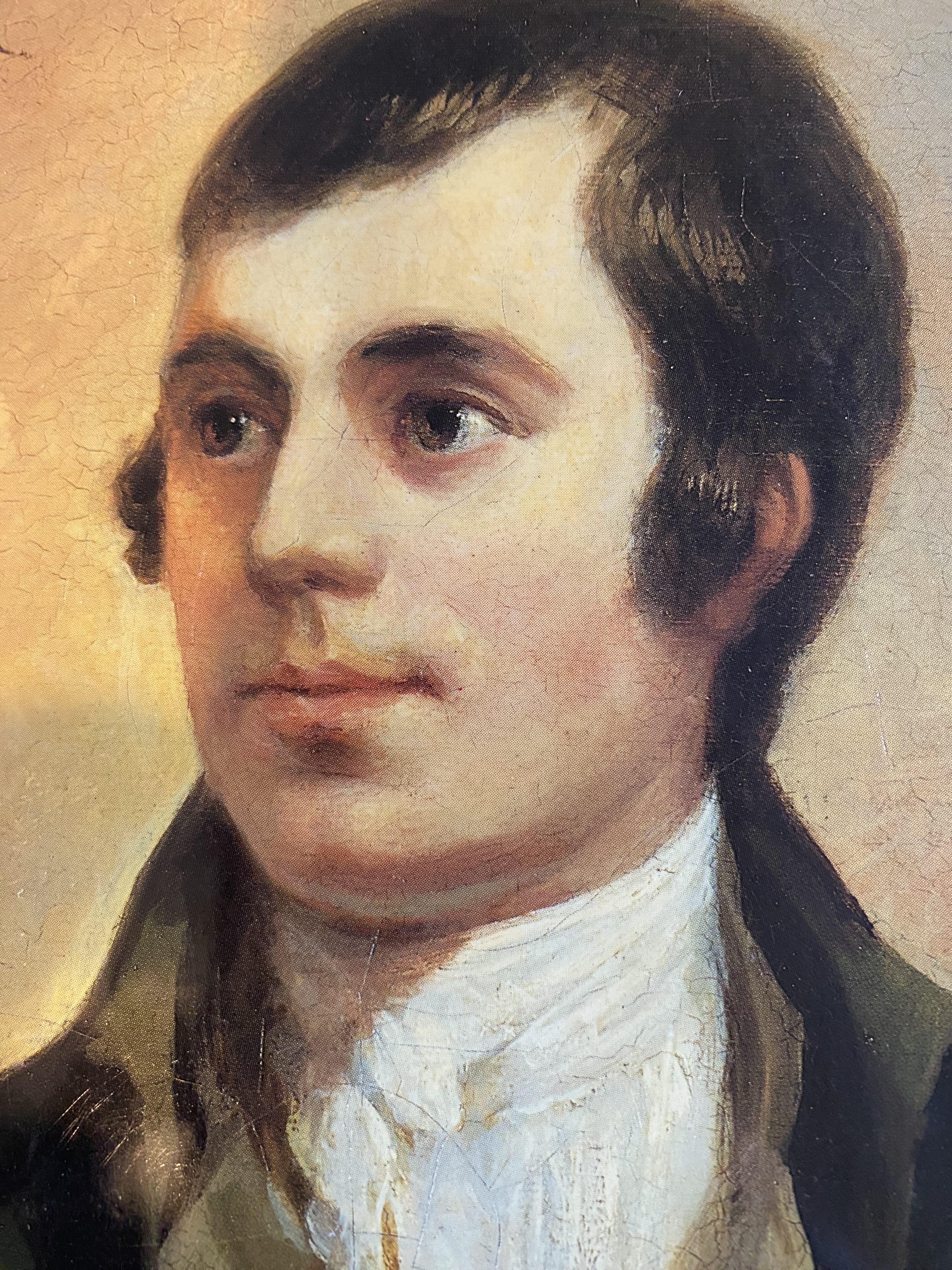
However, notwithstanding his unfortunate..er… behaviour, may I present to you, Mr Robert Burns.

Celebrating Robert Burns’ Birthday

January 25th 1759 was as stormy as it is today and Burns celebrated it by writing

Twas then a blast o’ Janwar’ win’
Blew hansel in on Robin.

Burns Suppers are now held all over the world and here’s a bit from my book A Last Journey where we attend an unusual Australian Burns’ Supper.

The trouble was, we weren’t Scottish enough. We had only been in Penola a day when a man called round to ask Bill to join the local pipe band. His face registered incomprehension when Bill confessed to being unable to play the bagpipes. 

‘But I thought you were Scottish,’ he spluttered.

These inhabitants of the small South Australian town turned out to be more Scottish than us. Penola had been settled in the 1840’s by waves of English, Irish and Scots immigrants drawn to the offers of free land. Alexander Cameron from Lochaber was the first, setting up Penola Station in 1844. Another, John Riddoch from Turriff, had first gone to the goldfields to make his money. In 1861, he had come to the area where he had bought 35,000 acres. He had recognised the importance of the red earth, the terra rossa, for growing grapes and encouraged the settlers to plant vines. His foresight ensured the prosperity of the area, Coonawarra wines now being world class.

But there was a price the settlers had to pay. The older part of graveyard in Penola was filled with the graves of those first immigrants. Young men and women who had come from Tain and Aberfeldy, Dumfries and Lewis. Their infant children of whom there were many, and their older children who had managed to survive the difficult first five years only to die of some fever or snakebite or accident with the cattle. It made hard reading. Some names were still evident in the town – McLeod and MacKay, Meikle and Burns. Their descendants still lived in Penola, if perhaps not wealthy, then managing to live a reasonable life far beyond the dreams of their ancestors.

They kept up the old traditions too. Or at least, they had versions of them, passed down through generations and adapted and modified to meet the circumstances.

So it was that we found ourselves at a Burns Supper one November 30th. It was early summer and already the temperature had risen into the nineties and stayed there well into the evening. Bill, despite his inabilities musically, had been asked to do the Address to the Haggis. He wasn’t keen. He had never been to a Burns Supper. He had never read much of Burns apart from having to learn To a Mouse for a school poetry competition in Primary 5. He had left Scotland to get away from the kitsch of tartan and shortbread. I had to dragoon him into accepting.

The evening began in the local Church of Scotland with communal singing. We started with On the Bonny Banks of Lock Lo-mont, followed by It’s a Long Way to Tipperary and climaxing with Danny Boy. Eclectic and surprisingly good fun given the setting. We then retired to the church hall where Bill was to do his piece. Dressed as he was in his best pale blue zoot suit, he was only slightly put out to see that he was the only male not in the kilt. He didn’t possess one. He had never even hired one. He had no intention of ever wearing one. 

However he did his part with remarkable aplomb. The piper led the procession in (was that the job they had hoped he’d fill?) and the haggis followed in tartan splendour. It was set in front of him and he recited the verses with the assistance of the crib cards I had prepared for him. (‘What on earth does it all mean? I don’t understand a word of it.’ ‘Just learn it, will you?’)

Bill stabbed the haggis with the kitchen knife provided (it went in with a satisfying splurch) and duly mangled the beast. It was then taken away and to our surprise, the buffet began. Sandwiches, chicken legs, sausage rolls, salad, all followed by the best Australian pavlovas, sickly sweet and soft and drenched with cream. 

Then came the haggis. On cocktail sticks. And mercifully in bite size pieces. After the tooth rotting pavlova, it tasted, well, out of place. Some of the guests refused to touch it, treating it like some outlandish foreign muck. As it is. In Australia at any rate. 

The night gave us many a laugh in the forthcoming months. How those daft Aussies didn’t know how or when to hold a Burns Supper. How they couldn’t tell the difference between the Scots and Irish heritage. Conveniently, we forgot our own ignorance and denial of Scotland.

Time, maturity, whatever, have lessened our ribaldry. Have given us an understanding of what it meant. It wasn’t a celebration of Burns, or of Scotland. It was an act of remembrance of all those names in the graveyard. Of James McLeod from Lewis, of Robina Meikle from Tain, of countless, nameless, infant children. Of all those brave souls who had set out from Scotland to face the unknown. Who had left behind family and friends, knowing that the chances of ever seeing them again were virtually nil. Who were prepared to face great hardship in order to attempt to forge a better life for their families.

They had a long hard struggle in a strange environment where nothing existed that they were familiar with. No identifiable trees or animals, save those they brought with them. No rains or mists or mountains or stretches of open sea or lochs. No blackbird song or gulls’ cry, no gaelic save their own speech, no tales but those they told themselves.

Is it any wonder they clung to the familiar traditions and habits? That they tried to keep burning that which identified them as Scottish? 

So on each Burns Night, I raise my glass to them, to those pioneers who showed such bravery and strength and resolution. I celebrate the character of those long dead Scots and the legacy they left behind. 

Slainte. Good on you, mate.

Available from lumphananpress.co.uk or Amazon

The Coach Trip (Part 2)

The hotel is owned by the coach company and set up to cope with oldies. We all go in to eat at certain times according to the bus we came on, and sit in the same seats. The staff are all young and foreign and quite delightful, serving us quickly and efficiently with our meals. They are also trained to spot anomalies. One guy, travelling alone and obviously with chronic illness, didn’t appear for a meal and the staff reported this and the receptionist phoned his room to check on him. Fortunately he was just tired and not hungry. His table was right next to us and he was sitting beside a couple who neither spoke to each other or to him throughout all our meals. I wouldn’t have wanted to join them for such meals either.

The hotel at Loch Tummel

Every day we climbed on our bus, Donnie the driver, head counting us to make sure he had the right number, and more importantly, the right people. One or two wandered on to our bus by mistake and had to be gently pointed in the right direction of their transport.

Donnie’s big bus

Donnie knew every single-track road in the area. It was wicked fun to watch the expressions of the drivers who met our large, far too broad bus for the road, on a bend and had to stop suddenly and squeeze past while we sat aloof and rather smug.

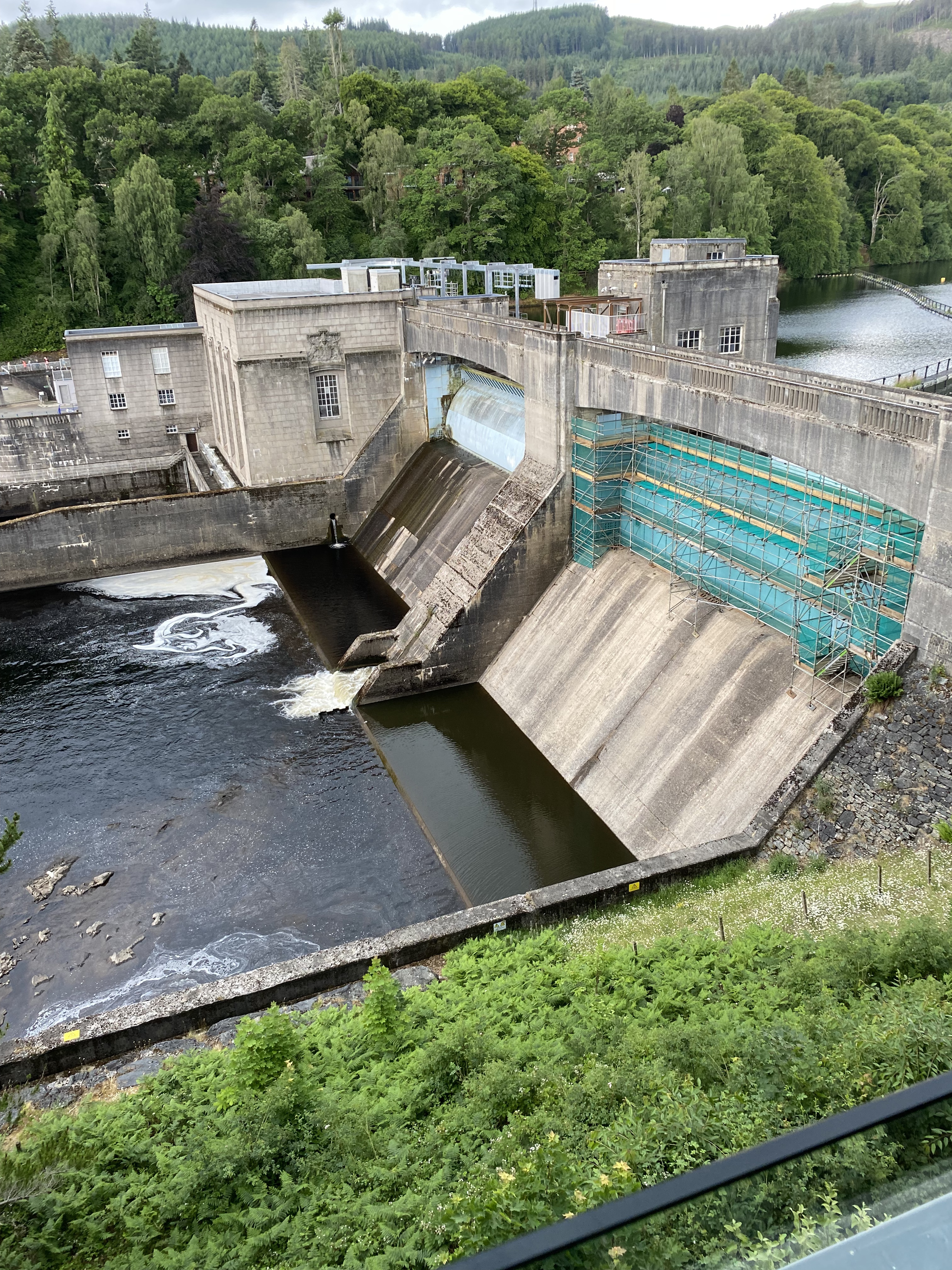
We travelled to various tourist places each day and were ejected from the bus to explore for a few hours. Pitlochry was an interesting stop with the dam and salmon leap close by. However the salmon weren’t leaping, it not being the time of year so we adjourned to the visitor centre set high above the dam and with magnificent views from the cafeteria. There is also an exhibition area explaining how the dam was built and how it works to provide hydroelectric power with interactive models so you can produce your own power or make recalcitrant wooden salmon leap upstream.

Pitlochry Dam

It was raining in Aberfeldy so we nipped into an unusual shop run by an Irish artist, Ryan Hannigan. He has some old printing presses in the shop that he uses to print his own designs. He is also a musician (you can buy his CD or vinyl there too) and he recycles old uniforms and army gear into stylish clothing for sale.

The site of the battle of Culloden meant an early start but well worth it. The story of Bonnie Prince Charlie and his epic attempt to wrest the throne from the English is vividly told in the visitor centre and you can experience the sights and sounds of the terrible fight all around you. Then to the battlefield itself with flags marking where the Jacobites stood against their enemy in a desperate attempt to halt the retreat.

A gravestone at Culloden

After all that blood and guts it was a peaceful afternoon in Aviemore where Sheila met us and took us to her new home and lunch.

It was a quick few days and on the way home, Donnie stopped in Callander to allow us to browse through all the wee artisan craft shops, a perfect way to spend a wet afternoon.

It was an easy experience of a holiday. No hassle, food, accommodation and trips all organised and running smoothly. Even the weather was kind on the whole. We were taken care of and driven about very comfortably. I saw parts of Scotland I’d never visited and others I hadn’t seen for a very long time. 

The Coach Trip (Part 1)

I’d just finished reading The Coach Trip by Izzy Bromley aka Imogen Clark when a friend asked if I would like to go with her on – a coach trip! Me? A coach trip along with a bunch of oldies? Except – I am an oldie now.

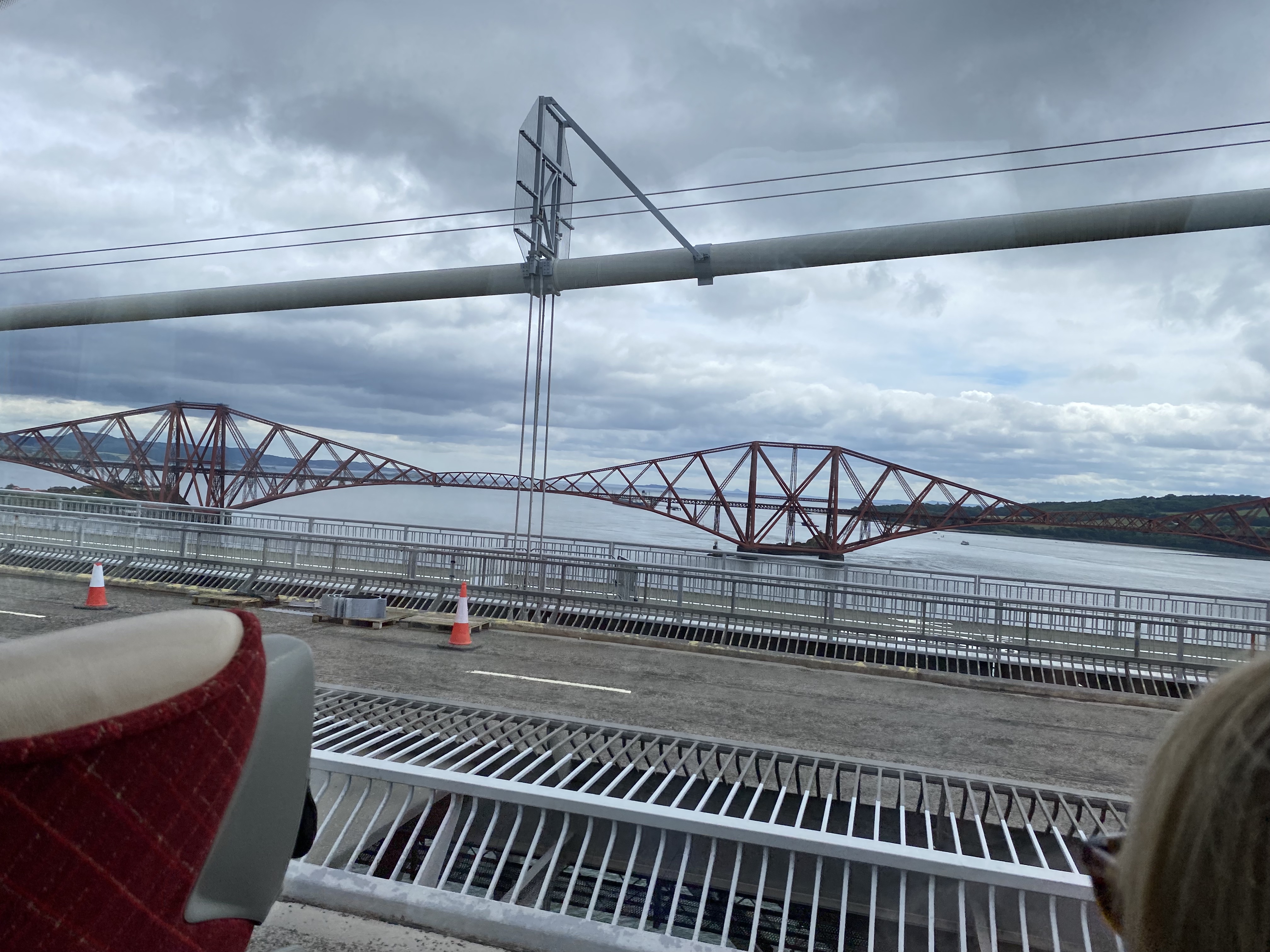
So in the spirit of adventure or at least, trying something different I agreed. It was only four days and we would stay at an hotel and travel around every day and return to it for dinner and bed. So I wouldn’t have to unpack and repack and breakfast and dinner were included. My first mistake was not putting the label supplied on my case. “There’s always one,” moaned Donnie the driver, as we set off on a mini tour of central Scotland picking up other adventurers. Eventually we were all accounted for except for one poor soul that Donnie hadn’t been told about and was left languishing on a pavement until the company sent a taxi to pick him up and chase after us to Perth. We crossed the Forth Road bridge on our way, the three bridges looking glorious from the coach window.

The First Forth Bridge

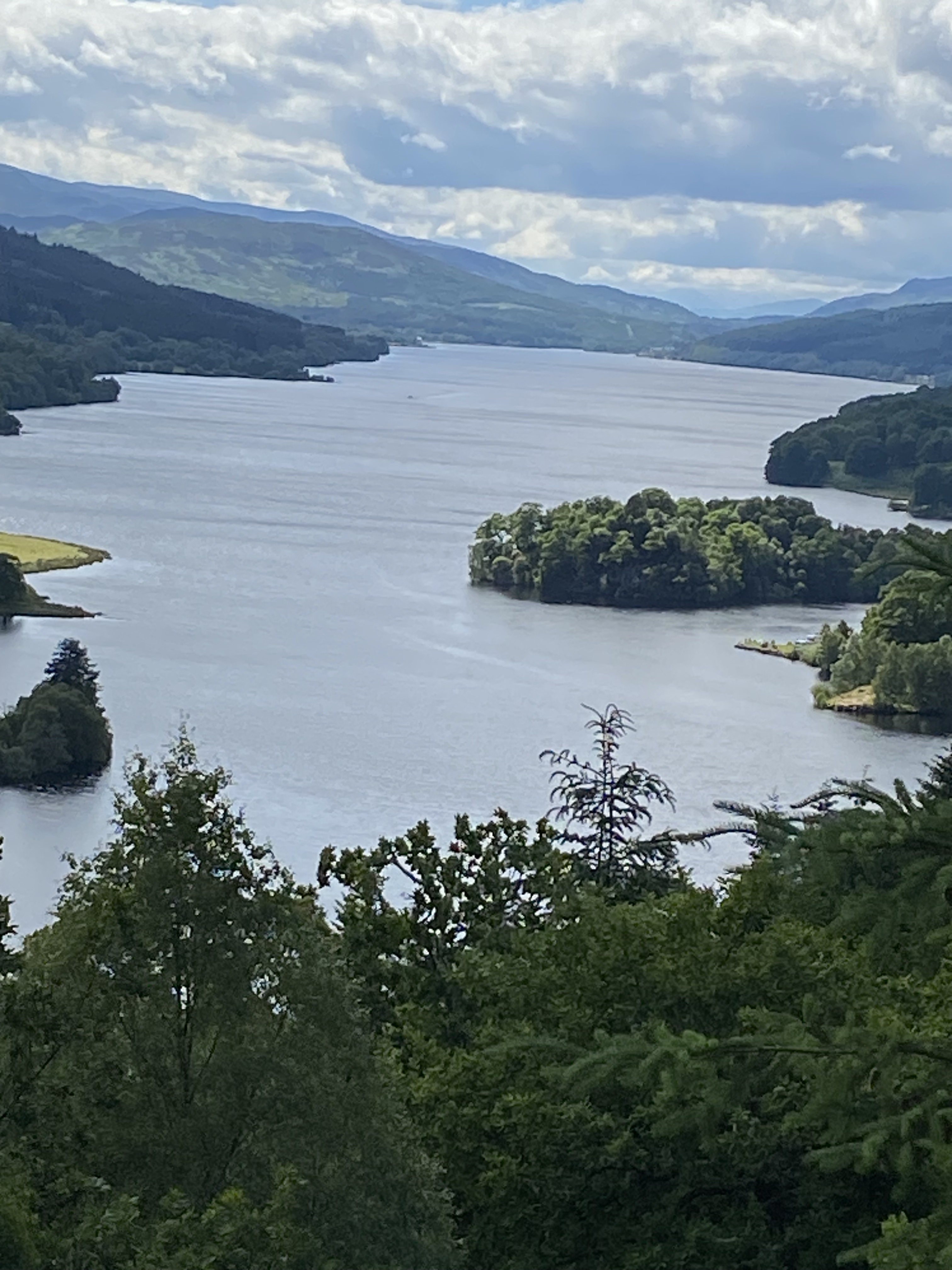
We didn’t see the best of Perth as the road beside the river was closed so we wandered round the shops, had lunch and dithered until it was time to get back on the bus. Donnie stopped at the Queen’s View overlooking Loch Tummel before heading for the hotel situated on its banks. There is nothing more beautiful than Scotland in the sunshine and no wonder Queen Victoria like it so much. Mind you, it must have been a fair trek by carriage to get there. Or had steam trains reached there by then?

The Queen’s View at Loch Tummel

We settled into our rooms and headed out to grab a seat along the shore of Loch Tummel at the edge of the lawn. We had packed some cocktails and with it being so hot, we had to knock back several before dinner.

And at dinner, we had classic peach melba with tinned peaches! I have a story in my collection, Take a Leaf out of My Book, entitled Peach Melba, about four old dears who escape from a care home and have a meal out with peach melba as dessert. Was I turning into one of them?

Coronavirus: Pandemics in the Past

This is an article I wrote on the history of pandemics in Scotland.

Scotland and its Pandemics

c0481846-wuhan_novel_coronavirus_illustration-spl

As the coronavirus pandemic sweeps across the world, we are controlled by government restrictions as to what we may do. All schools and non-essential shops and businesses are closed, all places of entertainment and leisure are shut, while leaving our home is restricted to once a day for fresh air and exercise, and vulnerable people are to stay isolated for anything up to 12 weeks and perhaps beyond. All social gatherings are banned. Those who do not obey are fined.

Nurses and doctors wear protective equipment and patients are isolated. Curbs are put on panic buying and foreign travel is heavily restricted. 

And yet, this is not a modern way of coping with an epidemic. A 16th century Scot would be only too familiar with such clamp downs on personal freedoms. These type of restrictions in the face of a pandemic are centuries old.

One of the first recorded reports of a pandemic was by a monk by the name of Bower, from the monastery at Inchcolm. Plague had entered Scotland in 1349 from trade with Asia via Mediterranean countries and killed two-thirds of the population, including 24 canons in St Andrews who were infected from attending the dying.  In 1361, it struck again, killing one-third of the population.

1498-99 saw the plague revisit Edinburgh and the Lothians and restrictions were put in place. All taverns and schools were closed and there was a 10pm curfew. All residents had to take a turn guarding the town gates to prevent the entry of food and goods from infected areas. Any English cloth brought in had to be burnt. Punishments for disobeying those rules were banishment or death. 

In Haddington in East Lothian, dogs and pigs had to be kept in a yard rather than roaming the streets. Children found out and about were put in stocks and whipped, a teacher running a school would be banished while all shops and stalls were closed.

The need to cleanse contaminated places was recognised. Cleaners were employed at the rate of 12p a day to wash and smoke out infected houses.

In Edinburgh in 1500, more restrictions were introduced. The main market in the Lawnmarket was closed and anyone bringing in goods without permission was punished; women were branded on the cheek and men had a hand cut off.

All members of a household with a plague victim had to avoid contact with anyone for 12 days.

1505 saw further regulations. Illness must be reported within 12 hours and each close had to have two people in charge of identifying those who were ill and organising the cleansing of their abode.

plague-doctor

Plague Doctor

Plague continued to be a problem until 1514 with even stricter rules coming into force. Clearing of rubbish was instigated and all beggars and indigents were driven out of the city.

But by 1530, the plague had returned and continued to do so until the early 17th century. Punishments were still harsh, branding being a popular choice though a man who attended church, knowing his wife had the plague, was hanged.

The importance of cleansing the homes and goods of those infected was recognised and in Edinburgh in 1574, John Forrest was appointed to be in charge on pain of execution if his efforts at containing the plague were not successful. Apparently he succeeded,  as in 1585 he was again in charge of cleansing houses and homes deemed to be infected.

Those with plague were taken out to the Burgh Muir as were their contacts, where they were kept separately. Others were kept shut in their homes with food and drink being supplied until they either died or recovered. The townspeople were not to congregate around the close mouths and the muck and ordure was to be removed from the streets.

The Great Plague of 1665 in England did not reach Scotland though sporadic outbreaks occurred over the next two hundred years.

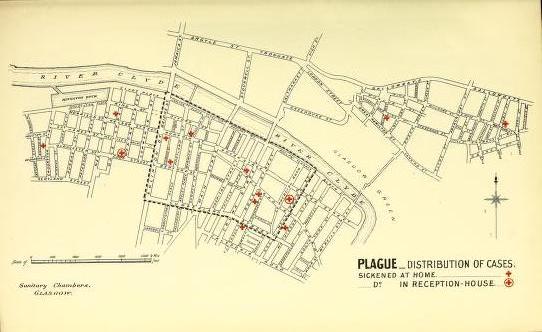
The last instance of bubonic plague happened in August 1900 in Glasgow in the Gorbals. Situated down by the River Clyde where ships from abroad were docking and foreign sailors coming ashore, it was no wonder that the plague was brought there from the many other overseas ports infected with it. At first it was thought to be typhoid which was much more common then, especially in the overcrowded and unsanitary houses in the Gorbals area. But a doctor recognised the symptoms of plague and measures were immediately introduced.

Rats were suspected of being the carriers and an army of rat-catchers was sent out to try to eradicate the creatures. Glasgow at that time, was well used to outbreaks of infectious diseases and its hospital system, although pre-dating the National Health Service by almost 50 years, was prepared and ready to deal with the outbreak. Its quick response meant that, in all, the plague was confined to a few streets in the area with 35 people infected and 16 dying. 

1n 1898, it had been shown that it was the fleas on rats which were responsible for spreading the disease, but the Glasgow public health authorities suspected that human contact was transmitting it. With the overcrowded conditions in the Gorbals at that time, the rate of spread suggested just that. The Medical Officer for Health immediately set up an investigation and identified Mrs B, a fish hawker as being the first person to fall ill along with her grand-daughter. They then identified anyone who had attended her wake and quarantined them. In support, the Catholic Church banned wakes of those who had succumbed to the plague. The plague was then successfully contained and quickly eliminated.

plague streets

Spread of the plague, Glasgow 1900

Recent research in 2019 by the University of Oslo found that indeed, the authorities were correct in suspecting human contact to be the means of transmission and that the killing of rats did very little to control the plague. Had the authorities not responded so quickly in identifying and quarantining those infected as well as their contacts, the plague could have spread beyond those few streets.

We have become complacent over the years with the advent of antibiotics and other medicines but now we are faced with a pandemic that is out of control and which does not respond to the medicines we have. We have reduced our medical facilities to a bare minimum, now inadequate and unable to cope with such a spread of disease. So we are having to fall back on to the old ways, used for centuries and effective if strictly applied and endorsed with severe punishments. 

We have a long way to go before Covid 19 is eradicated – for the time being. Let’s hope the lessons from history will be learnt.

Love Begins at 40!

I’m delighted to say that my latest novel, Love Begins at 40, is on pre-order for kindle at 99p/99c.LoveBeginsAt40byAnnBurnett100

It’s set in a small seaside town on the west coast of Scotland, Largs, which I know well, and where I spoke last year at the local writers’ club. So they can take a share of providing me with the inspiration for it as I had a delightful day there.

It’s about Maisie, a successful business woman in Glasgow, who, as she approaches her fortieth birthday, has doubts about where her future lies. She has some rather difficult decisions to make that impact not only her, but other people in her life. Can she make the right choice? And what is the right thing to do?

But then tragedy strikes a double blow, and she’s forced to make those important decisions about what she really wants from life.
I hope you enjoy it. Please let me know what you think.

Confined to a Garret? No Chance!

This week has been celebrated as Book Week Scotland when writers all over the country have left their garrets and travelled the length and breadth of the country talking about books and writing and more books and more writing.

My friend Michael J Malone has been touring the west coast talking about his new book, House of Spines. (Cracking great read! I recommend it.) He’s been to Rothesay, Dunoon, Millport, Tobermory and …er…Wishaw. Definitely not on the west coast, that one!

pencil

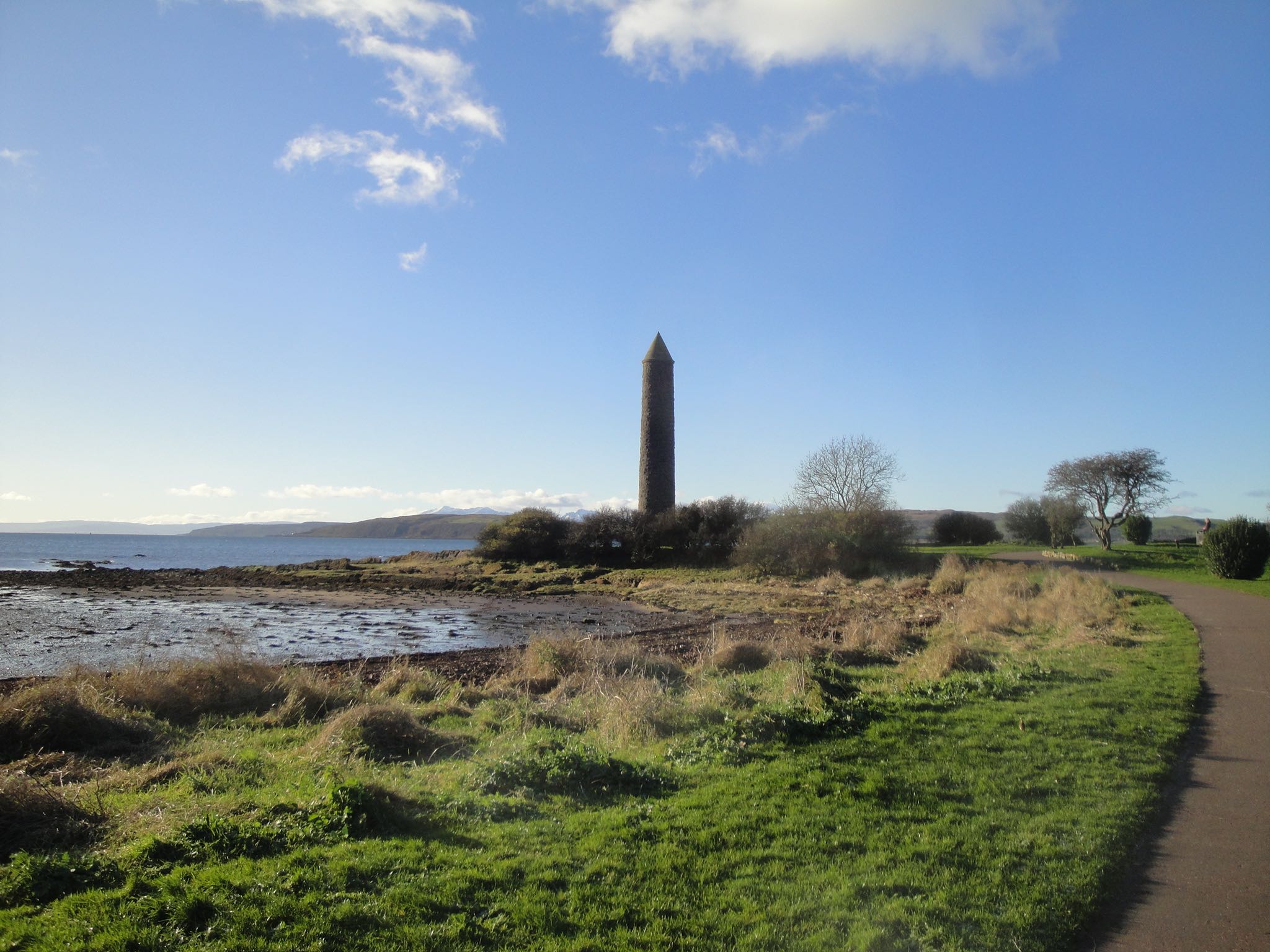
The Pencil, Largs

For my part, I was in Largs, not as part of Book Week but to do some research for my next novel. It was a beautiful sunny clear day with the temperature just hovering above freezing as we walked along the shore to the Pencil monument commemorating the Battle of Largs in 1263, and then on to the Marina, filled with yachts of all shapes and sizes, mainly parked up until the spring. And there was a very welcome restaurant where we had coffee and Danishes and thawed out before we walked all the way back.

Then it was to Perthshire, and past the Ochil Hills just tinged with snow, to the Auchterarder Book Fair, part of their celebration of Book Week. We set up our stalls, or rather tables, in the hall with our books on display. I was surrounded by historical novels, crime, science fiction and fantasy, and did I detect an element of competition as we tried to attract customers to look at our books and hopefully buy one?books

I was one of the authors who gave a short talk about their writing life, starting with my five years with Postman Pat and moving on to the present day and A Scottish Childhood, and the future with my novel Festival Fireworks.24255073_1980255258879716_3265096166631918755_o

And all this gallivanting doesn’t stop there. Next weekend is the Society of Authors Christmas lunch in Edinburgh where there will be many friends to catch up with and have a jolly, merry afternoon.

Can’t not mention the success at the Imprint Writing Awards of members of Ayr Writers Club. Six members were shortlisted and the club scooped 1st, 2nd and 3rd in the poetry section, (one member winning two prizes) and 1st and 2nd in the short story.  It’s a sign of a very vibrant and talented club and one I’m pleased to belong to.

Shortlisted for Imprint 2017

Shortlisted for Imprint


A Scottish Childhood: Growing up a Baby Boomer.

I’m delighted to announce my latest book, A Scottish Childhood: Growing up a Baby Boomer has now been published. I’ve collected together all the articles I wrote for the magazine, Scottish Memories, before, sadly, it closed. A Scottish Childhood

I’ve added an introduction and more photos that my father took of us growing up in the West of Scotland after the Second World War. He was a keen amateur photographer, winning prizes for his work and publishing photos in newspapers and magazines. One of his pictures was also used for an advert for bicycle saddles!

But it wasn’t all sweetness and light. The marriage broke up and eventually I decided that I wanted very little to do with him as I blamed him for the distressing circumstances we found ourselves in. It was only after his death when my brother handed over photographs and journals which my father had compiled that I was able to reappraise the man he was and learn to my astonishment that he too, had been a writer.

As I looked through the photographs which he had taken, it brought vividly to life happier times in my childhood and this book celebrates those days.

The book is available on Amazon.

Excuses, Excuses….

I know it’s been too long since I wrote a blog piece but I’ve been busy getting ready for going on holiday, being on holiday and recovering from going on holiday. It’s all hard work you understand!

But I’m back and I’ve run out of excuses so I’m about to throw myself back into writing. I missed the first two nights of Ayr Writers’ Club new season (see above for my excuse) and I should be at Michael J Malone’s launch of his latest book, House of Spines, tonight but I’ve run out of steam. (More excuses.) However I’ll catch up with him and his new book later.

I’ve my book of articles on growing up in the West of Scotland after the Second World War to sort out. I’m stuck because there are apparently hidden text boxes in the manuscript and the powers that be at Lulu (the company I use to publish my books) don’t like it. And I don’t know where they are. I left it there when I went away, hoping, ludicrously, that it would have sorted itself out by the time I got back, but of course it hasn’t. So I will have to search all the forums to see if anyone else has had that problem and what they’ve done about it. I also posted a question on Lulu’s help-desk but the reply I got only took me back to the information site I’d already read my way through.

Part of the problem is that I work on Mac Pages and export to Word.

In the meantime, here’s the photo of me I’m going to use on the cover, once I get that far. You’ll see I haven’t changed much over the years. front of book

I bet there’s a few of you out there had a pair of Clark’s sandals like mine. A new pair every year in time for summer. And no comments about the knickers please! Remember everything was hand-made in those days so no doubt they were cut down from my granny’s old ones.