Jean Armour was Burns’s long suffering wife who scarcely rates in the Burns hagiography but who deserves to be remembered and appreciated for all she did for him. I wrote a poem about her when doing my Masters in Creative Writing at Glasgow University.
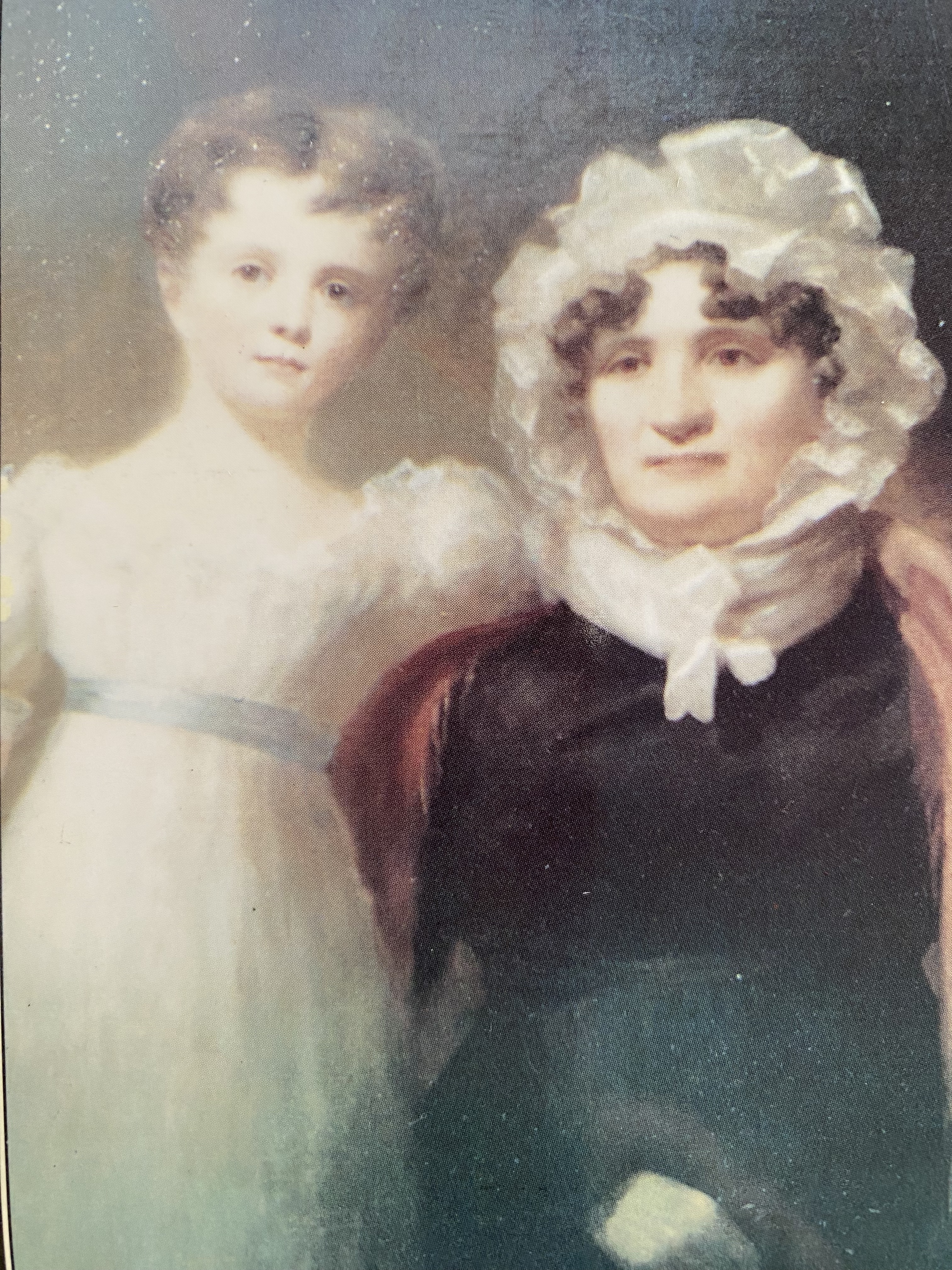
A widow reminisces on the occasion of her late husband’s birthday
He wisnae much use as a husband, mind.
Oh aye, he was a charmer,
Ask any lassie for miles aboot,
See it in eyes o weans scattered aw roun.
But reliable, naw. A guid provider naw.
Too fu o ideas and thochts and thinking, no enough hard labour.
Left me wi a newborn and a debt to pay,
A book o verse and scribblins, sangs and bawdy lines
That entertained his cronies many a night
While I watched the weans and stoked the flames o wrath and regret.
Too fu o radical thoughts that had the long finger pointin and
Murmurins o treason and revolution,
Too fu o lust and adulterous fornication
for the black coated kirk to stomach,
Often too fu.
No, no a guid husband as you’d cry it,
But whit a man.
My friend, Catherine Czerkawska, has written too about Jean Armour. Her book, The Jewel, about her is available on Amazon.
And I wrote a fantasy story about Burns and the sycophantic fans he seems to accrue!
A Man’s a Man for a’ that!
Surely the most appropriate person to invite to the Robert Burns Celebration Festival was Robert Burns himself.
It was my duty and pleasure to invite him. I have studied his works for many years and devoted my life to the reading of his poetry. He has been my hero (what an overused word to describe my obsession with him and his work) and the opportunity to meet him would be the highlight of my whole life. Nothing was too much for me as far as he was concerned. In fact, I was prepared to die for him.
It took a bit of arranging. Time of my death, whether temporary or permanent, manner of death, where exactly he was, were all matters I discussed with the agent. Despite some trouble with the seventh commandment, the adultery one, he had in fact been accepted above and not consigned to that other place.
The date was set for my demise. I concentrated hard on what my first words to the bard should be. It was while I was turning over such weighty questions that I stepped out in front of the number 77 Express bus to Glasgow.
Despite knowing that this was the day, a surge of anger at the incompetence of drivers rose in me and I managed a weak shake of my fist at the underside of the bus before I succumbed.
I must confess to being keen to see the pearly gates and St Peter with his open ledger, so I was extremely disappointed to find myself outside what looked like the entrance to an NCP car park. A metal pole blocked my way and in a small porter’s lodge sat someone with his face hidden behind a copy of a newspaper (it was the Glasgow Herald appropriately enough) and his feet on the table.
I tapped sharply on the window.
‘Yes?’
‘Are you St Peter?’
‘No, I’m St Leger. It’s St Peter’s day off. What do you want?’
I showed him my special pass and he consulted a scruffy piece of paper decorated with coffee rings.
‘Right, you can go in.’
He pressed a button and the barrier rose.
I walked into Heaven. I was enraptured. Now, where would I find my hero?
An angel was hovering nearby, picking his nose I was horrified to note, so I tapped him brusquely on the wing.
‘Can you tell me where I can find Robert Burns?’
‘Which one? Robert Burns, plumber and heating engineer, Robert Burns, the dearly beloved infant son of Margaret, Robert Burns, one time teacher of English, Sir Robert Burns,…’
‘…the poet,’ I interrupted. ‘Scotland’s Bard.’
‘Aw him,’ replied the angel. ‘Follow the mists until you find him. He’s aye staring at his feet and muttering.’ And why not, I thought? Of course he would be still writing his immortal poetry.
Then I saw him. He was sitting on a grassy knoll, with his chin resting on his fist and his eyes gazing ahead. A perfect sight, a vision of our greatest poet at work. I stood quietly, not daring to interrupt his reverie.
This was the moment I had been waiting for. This was my destiny. There he was, Robert Burns, the Bard of Scotland, still communing with his Muse.
I stood there in silence. Unfortunately, my stomach gurgled noisily.
‘Got a wee touch o’ wind in the baggie?’ were his first immortal words.
‘Mr. – er – Burns,’ I stammered, my face reddening with embarrassment at the thought of what deathless prose my previous night’s chicken vindaloo had spoiled, ‘I’ve been granted a short visit to speak with you.’
‘Are you frae Hell?’ His face brightened visibly. ‘Any chance o’ getting me a transfer oot o’ here?’
I was transfixed.
‘Why would you want to go there?’
‘Bit o’ life, ye ken.’
I thought at first he winked, but it must have been a trick of the light.
‘Unless of course, you fancy a bit of houghmagandie yersel?’
I recognised the old Scots word though its precise meaning escaped me for a moment. But the wink this time was unmistakable, accompanied as it was by a nudge in the ribs. I understood. He was going to sing to me.
‘I’d love that,’ I enthused. ‘Do you want me to join in? Or would you rather I just sat back and let you perform by yourself?’
‘Just do what you feel like, hen,’ he said. ‘I’m no that fussy after all this time.’
He took my hand.
‘You’d better watch him,’ a cherub said cheekily as he passed by, hitching up his cloud. ‘He’s only got one thing on his mind.’
Of course he had. How else could he produce such phrasing, such sentiments, such beautiful lyrics if his mind was not constantly in the act of creation?
‘Mr. Burns,’ I began again, ‘or may I call you Rabbie?’
‘Why?’
‘Well, everybody else does. Rabbie Burns. You’re well-known.’
The swear word exploded from him. An Anglo-Saxon one that I was shocked to hear coming from him.
‘Who tellt on me then? Was it that bitch o’ … naw, naw, it was her wi’ the big…’ His hands described two round objects. ‘It was, wasn’t it?’
I looked at him blankly. He drew himself up to his full height, which was less than I’d expected from his portrait, and peered up into my face.
‘Who was it?’
‘Nobody,’ I tried to reassure him. ‘I only meant that you’re well known because of your poetry. You’re famous.’
‘Ma poetry? Are you still reading it?’
‘Oh yes,’ I sighed, and bursting into song, I gave him the opening lines of his loveliest.
O, my luve is like a red, red rose that’s newly sprung in June…
He didn’t seem to like it and muttered something about eldritch skriechs.
‘What else do you ken?’
‘Tam o’ Shanter, The Cotter’s Saturday Night, Address to a Haggis, To a Mouse, Scots Wha Hae, Ca’ the Yowes, Auld Lang Syne, Ae Fond Kiss…’ I paused for breath. ‘John Anderson, my Jo, Holy Wullie’s Prayer, To a Mountain daisy, To a Louse…’
Burns’ draw dropped.
‘You mean, it’s lasted aw this time? Aw these wee bits o’ scribbling? Ah cannae believe it.’
‘Yes, your poems are known throughout the world and Auld Lang Syne is sung everywhere and there are Burns’ Suppers held world-wide on your birthday and not only that, I’m here to invite you to the Robert Burns Celebration Festival.’
His eyes lit up and he laughed.
‘Aye there’ll be a fair wheen o’ Burns in Alloway by noo, are there no?’ He nudged me in the ribs again.
I paused. ‘Yes there’s…. and …’ I mentioned two of Alloway’s worthies. ‘But I don’t know if they’re descended from your line.’
‘They probably are. I did my bit to help the population roon aboot.’ And he winked again.
That was just like Burns. To be so generous in helping out those less well off than himself. Man’s humanity to man, to paraphrase his own immortal words.
‘Ah’m looking forward to seeing the auld toon again,’ he continued. ‘There’s nothing to do up here aw day long. Mind you…’ He looked me up and down. ‘… you’d do at a pinch. Ye cannae be fussy aboot an old raincoat on a wet night.’
I pondered over the deeper significance of his utterings and was unaware of his arm moving around my waist until suddenly, he pulled me towards him and planted a slobby kiss on my lips.
‘Fair fa’ your honest, sonsie face,’ he began.
I tried to push him away but though he was small, he was strong – and desperate. His hands wrestled with my Marks and Sparks pure wool skirt and tangled with my underwear.
‘Mr. Burns!’ I shrieked. ‘Remember who you are!’
He obviously did for he redoubled his efforts and pushed me to the heavenly ground.
I tried to remember what the lady self-defence expert had suggested when she spoke at the Ayrshire Ladies Lunch Club and attempted to knee him but unfortunately missed.
His hands were definitely where they shouldn’t have been.
‘This won’t hurt,’ he was saying. ‘This won’t hurt.’
‘No, no,’ I murmured as my strength failed, while part of me kept whispering, ‘A man’s a man for a’ that…’
‘No,’ I said more loudly. ‘You are hurting me.’
A jolt of pain shot through me and I opened my eyes. I found I was staring at the underside of the number 77 Express bus to Glasgow.
‘This won’t hurt,’ a voice repeated and I looked into the face of an ambulance man who was gently moving me on to a stretcher.
‘You had a lucky escape,’ he said.
I nodded. I certainly had.
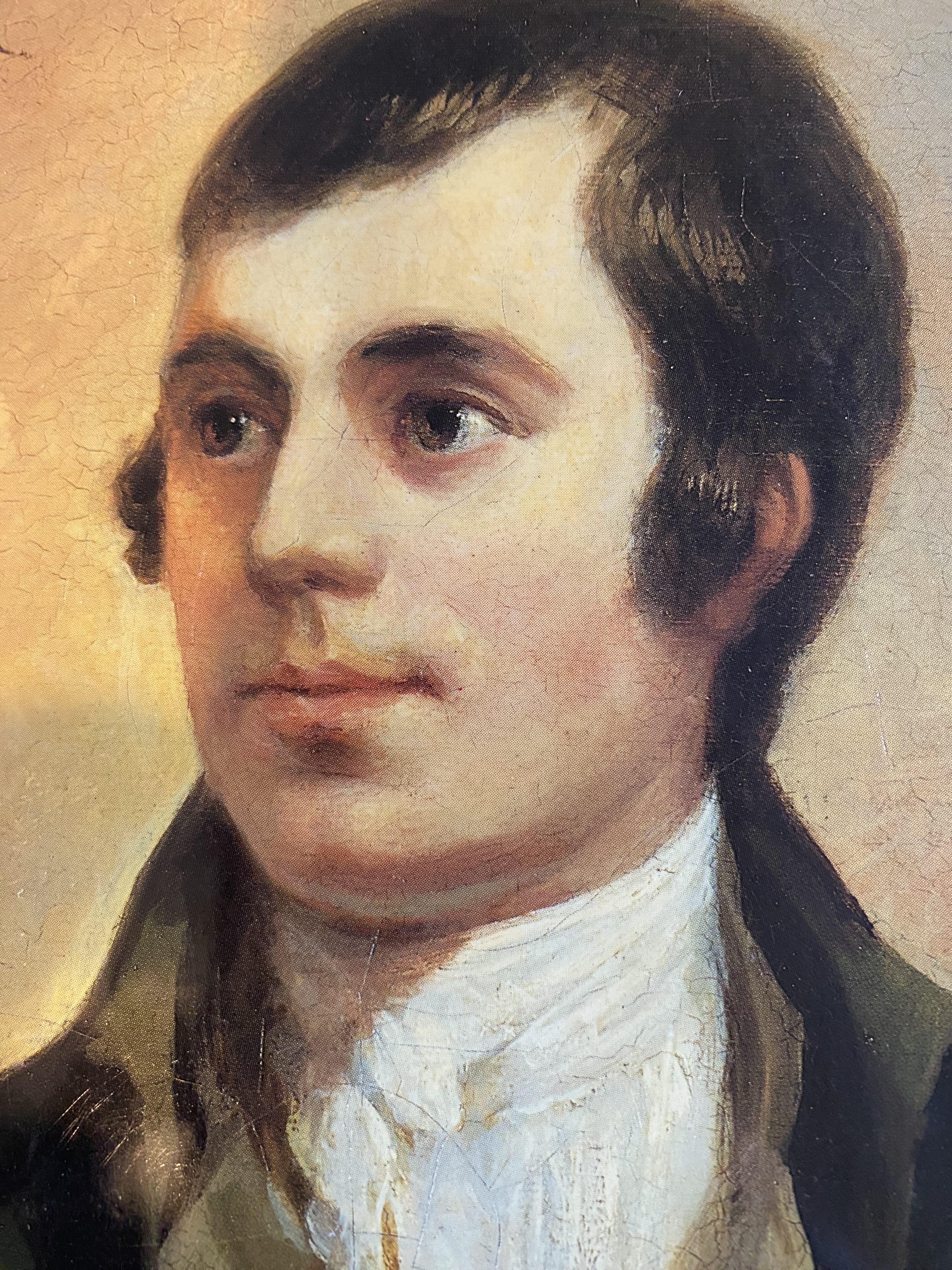
However, notwithstanding his unfortunate..er… behaviour, may I present to you, Mr Robert Burns.


 ann burnett