It’s just over a year since A Last Journey was published and it’s been quite a year. I’ve been busy giving talks and readings all over Scotland to dementia groups, carers, Meeting Centres, the University of the Third Age, and Probus. I’ve been on the radio and taken part in an online seminar at Dundee University.
Setting up ready for a talk
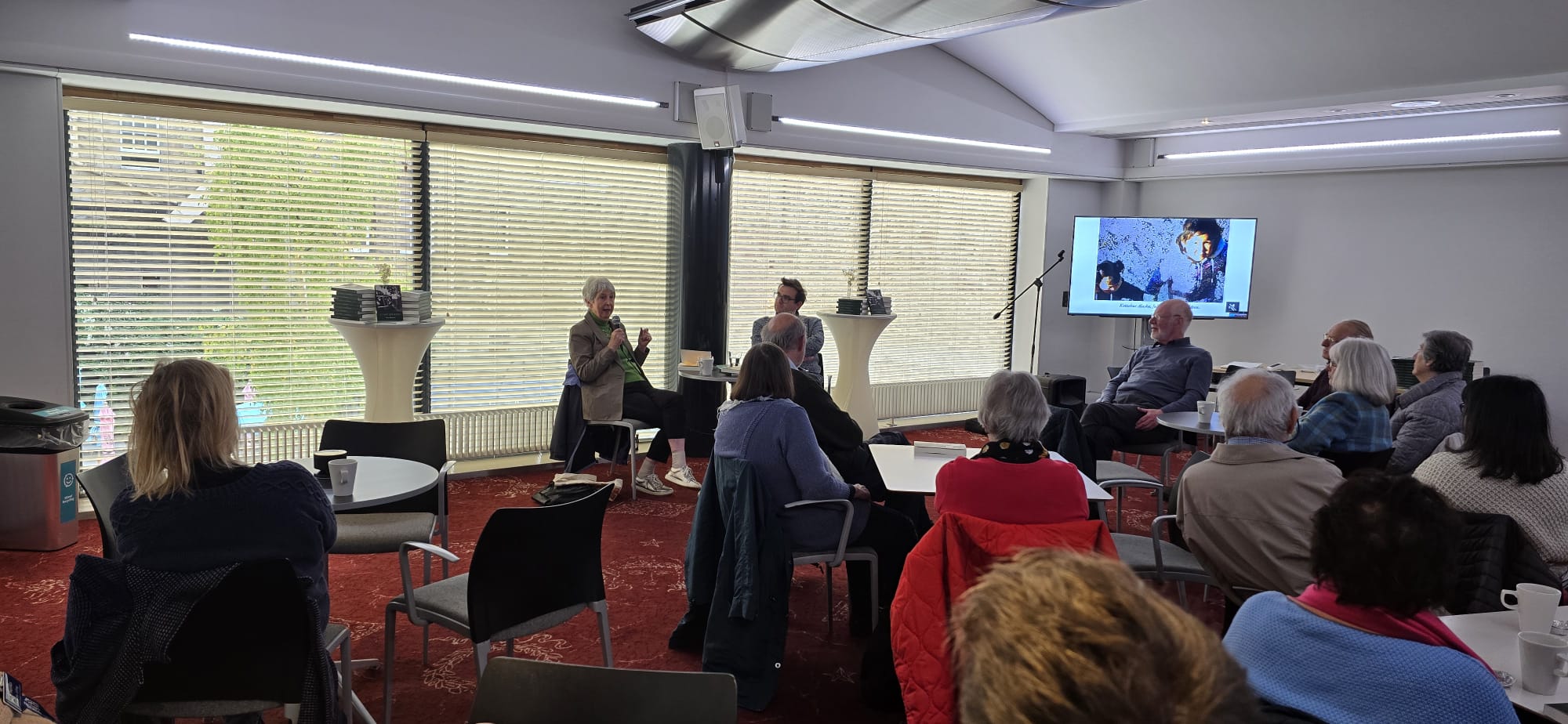
My most recent talk was at Probus in Longniddry with a very receptive audience.
I’m also a member of Edinburgh Festival Theatre’s Focus group for their dementia programme and discuss and suggest ideas with them. I also write the Hidden Lives column for their DementiArts magazine.
And to add even more, I’m part of the Haddington singing group who entertain at care homes and other social groups throughout East Lothian.
No wonder it’s been a busy and very satisfying year!
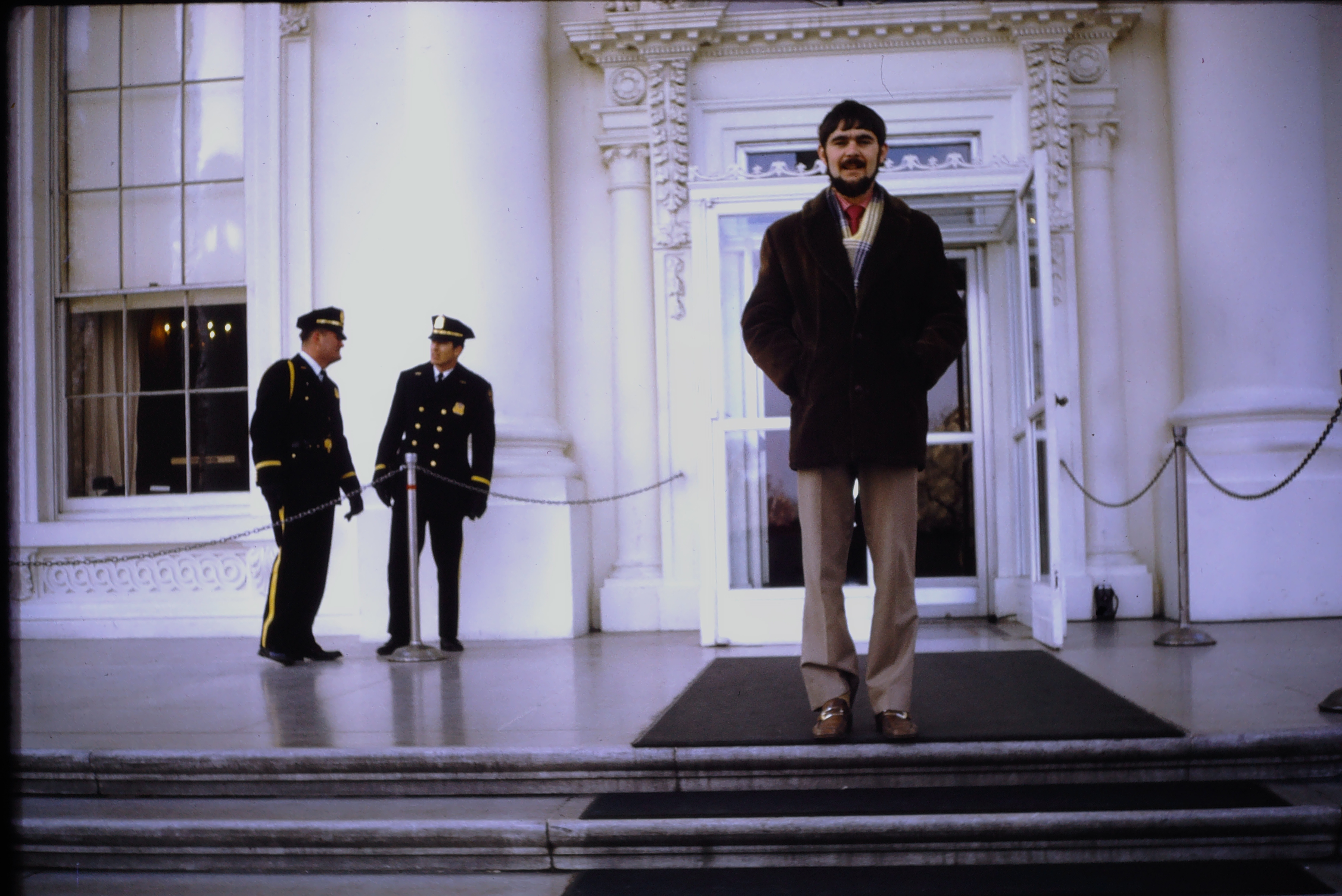
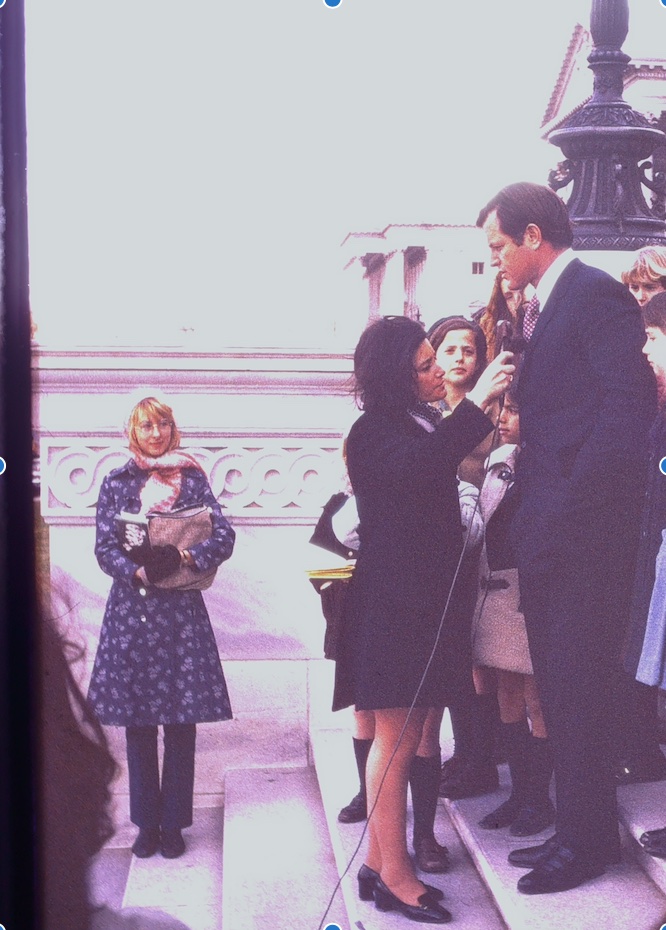
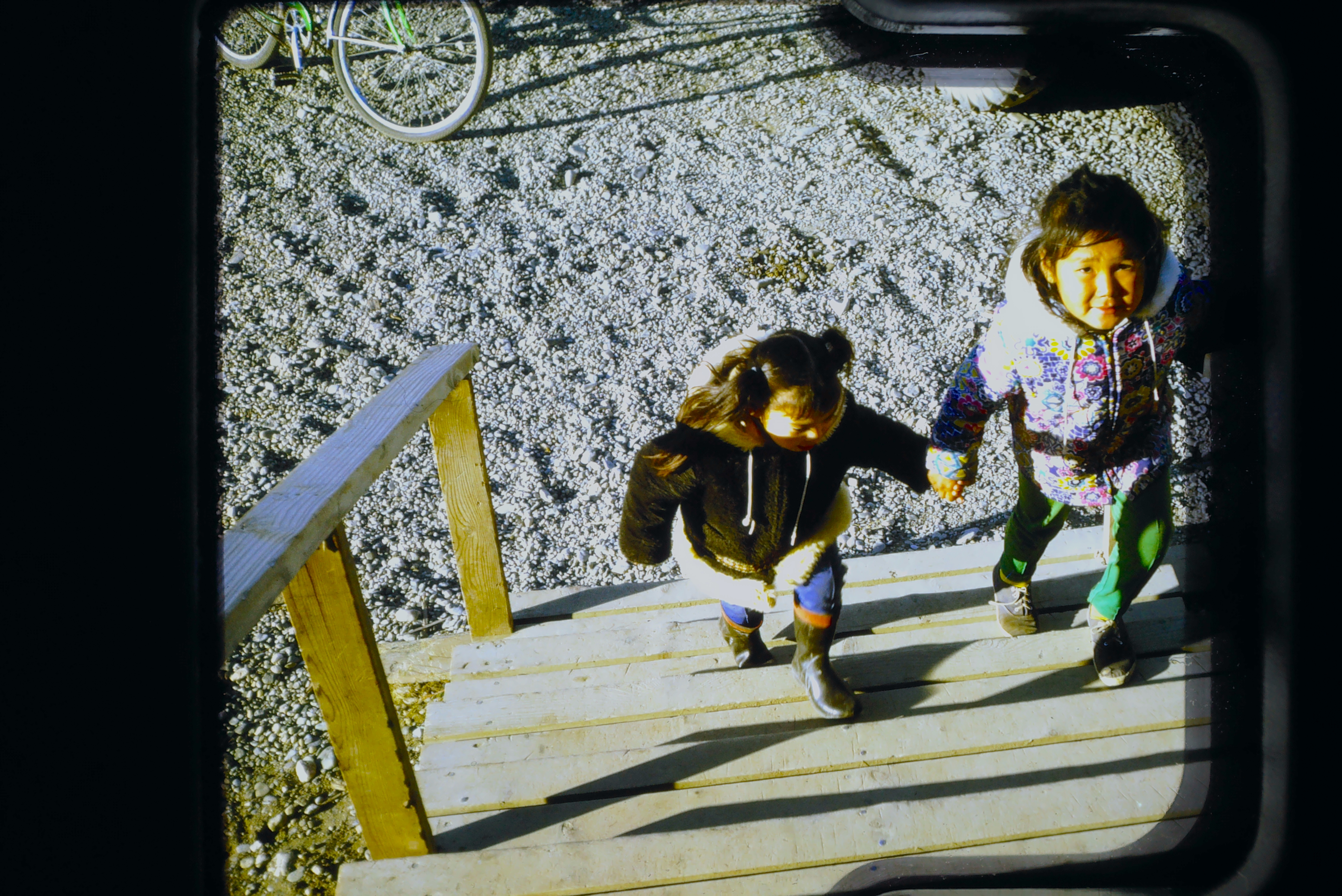
Those of you who have bought A Last Journey on Amazon are missing the photos which are in the printed book available from Lumphanan Press. So I thought I’d put up a selection of them for you to see. Here are some from visits to the USA in the 70s.
Bill outside the White House main entrance
Me watching Teddy Kennedy giving an interview on the Capitol Steps.
Screenshot
Inuit Children in Kotzebue, Alaska, situated above the Arctic Circle
The slides are now so old that they are not as bright or as clear as they were when they were taken in the early 70’s.
This is the story of our lives abroad and home in Scotland before Lewy Body Dementia got its claws into Bill and destroyed his life.
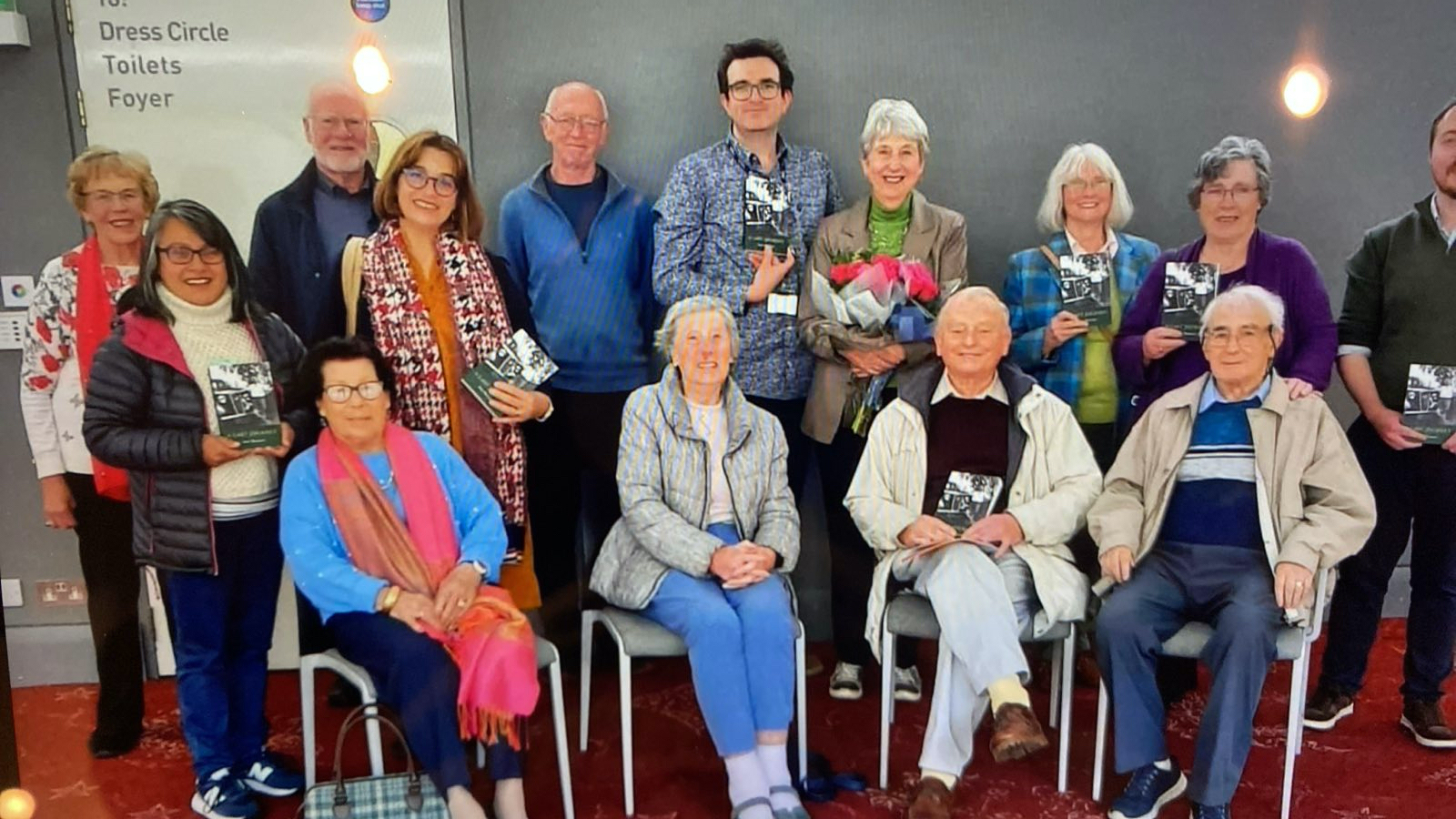
The launch was held at the Festival Theatre, Edinburgh where friends and family gathered to hear me talk about the book and how it came about. Alex Howard, Creative Engagement Coordinator for the theatre was the emcee and introduced the readings and took questions from the floor.
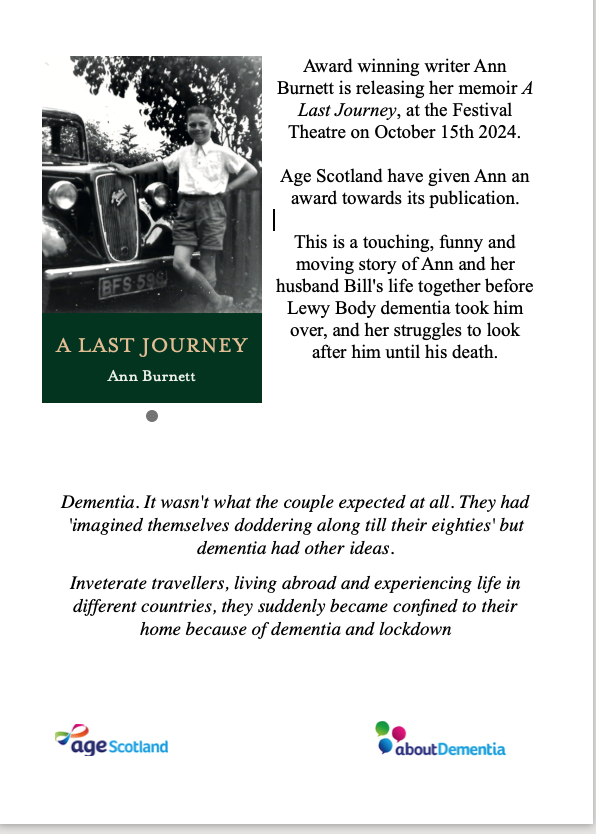
Award winning writer Ann Burnett is releasing her memoirA Last Journey, at the Festival Theatre on October 15th 2024.
Age Scotland have given Ann an award towards its publication.
This is a touching, funny and moving story of Ann and her husband Bill’s life together before Lewy Body dementia took him over, and her struggles to look after him until his death.
Dementia. It wasn’t what the couple expected at all. They had ‘imagined themselves doddering along till their eighties’ but dementia had other ideas.
Inveterate travellers, living abroad and experiencing life in different countries, they suddenly became confined to their home because of dementia and lockdown
Just a wee bit from my memoir, A Last Journey, to be published in October. It’s from the introduction.
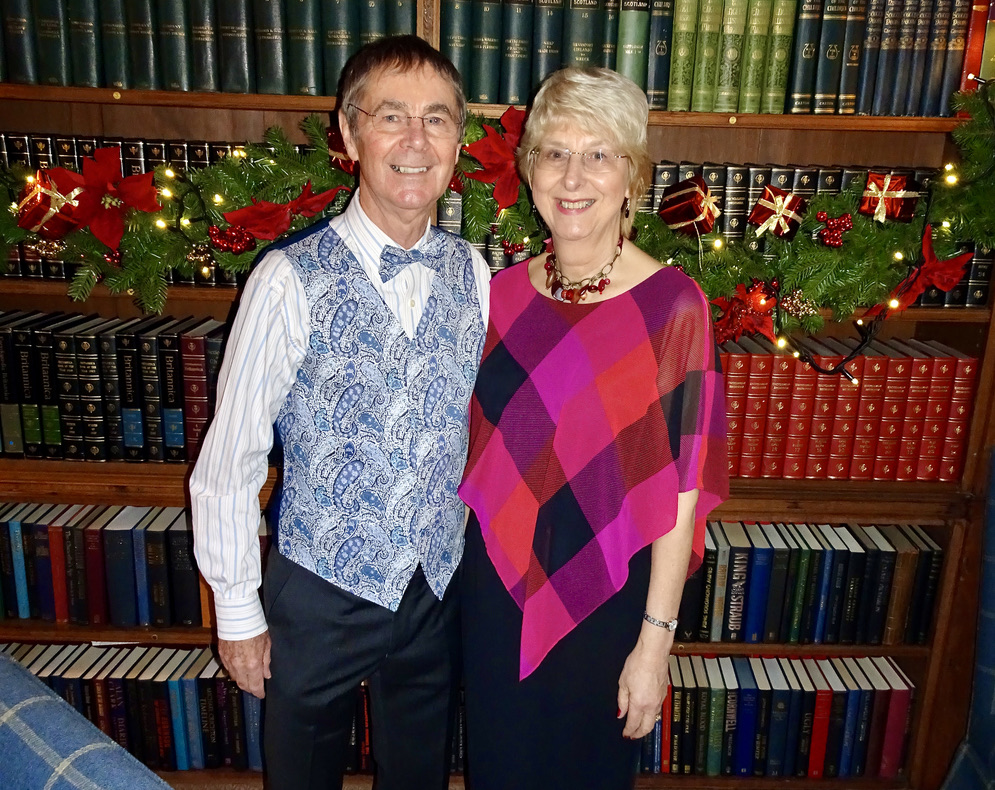
Our Golden Wedding in Dumfries House, 2016
My husband, Bill, and I imagined ourselves doddering along till we reached our eighties. Beyond that was a mist, fading away. But in our mid-seventies all that changed. Bill was diagnosed with dementia.
‘I’m shocked,’ he said to the consultant. ‘I didn’t think anything was wrong.’
But I knew. For several years something had been niggling away at me. Something wasn’t quite right. Forgetfulness you can put down to ageing, but this was more than that. For our Golden Wedding in 2016, I’d bought printed badges bearing the names of all our guests, even having different-coloured backgrounds denoting whether they were family or friends. I thought it would benefit our guests, coming as they did from a variety of our interests and activities, even including Bill’s new family members, who he’d only discovered the previous year. But really it was because Bill couldn’t remember names.
I even moved us across the country to be nearer our sons ‘just in case’. It took me until 2019 to persuade him to visit the GP and at least ask about his ‘problem’.
What is dementia? Alzheimer’s, the most common form, is what people usually think of when dementia is mentioned. But there are over 200 types of dementia and more may well be discovered. Every patient is different; they have their own unique symptoms and presentation of the disease. And the symptoms change and evolve as the disease progresses.
At the moment there is no cure. Every few weeks there is a media fanfare as yet another new miracle drug is claimed as the panacea for dementia. What they actually mean is that the drug might slow down the progression of the illness if it is caught early enough. A big if. Getting an early diagnosis is not easy these days. Doctors seem to be loath to actually do all the tests required to be able to say with any certainty that dementia is present. Is money and lack of resources the problem?
And dementia is terminal. It may be a long slow deterioration or, as in Bill’s case, a rapid gallop towards the end. For him, there were almost exactly three years from diagnosis to death.
But instead, I’ll focus on Bill’s drive and determination to continue living, despite a doctor’s prognosis which gave him only 18 months, as it was in Bill’s nature to put his head down and charge at whatever he faced, however much it came back to knock him down again and again.
There are always two people involved in dementia: the sufferer and the carer. Much is spoken about help for people with dementia, but help for carers is much thinner on the ground. Although dementia sucks the personality out of the sufferer, it reduces the carer as well. Weeks, months, years of caring leave the carer in a state of limbo, neither a partner nor a professional carer, stuck between two states of being, unable to participate fully in the activities and hobbies they enjoyed before, with only the knowledge that ahead lies the death of the loved one and an emptiness beyond.
I’ve written a book. A memoir all about the last few years when instead of writing I became a carer for my husband Bill. He was diagnosed with Lewy Body Dementia in March 2019 and died in March 2022. Only three years it took for that terrible disease to kill him.
I stopped writing during those years. I had neither the time or the energy to do it. My life was subsumed into caring for Bill. I tried to get as much help for us as I could so I joined Dementia Research. A student contacted me looking for people she could talk to about having carers in the home so for six months I had sessions over Zoom when she asked me about how things were going. I talked. And talked. She recorded our sessions, transcribed them and sent them to me after she had completed her research.
I also wanted the professionals who were dealing with Bill to be aware of the person he’d been, and not to regard him as just a poor old soul so I wrote a brief summary of all the things he’d done, his sporting achievements, the countries we’d lived in and the sights and experiences we’d had as a family and made sure there were copies of it in all his medical files.
After Bill died, I read the student’s transcripts over and realised how much I had forgotten about those terrible days. I wanted to recall other aspects so I started jotting down brief paragraphs about trying to find food that he could eat, about the sheer exhaustion of it all and what it did to me, about the carers who came to help, about the guilt and the sadness and the laughs. Yes, we even managed to laugh at times.
Then there were the diaries of our travels that I found when I was clearing out, the letters I’d sent home, the articles I’d written for an online site dealing with countries to see and visit. A tremendous amount of material and the only thing to do with it was to shape it into a book.
It took me over a year and many tears and much frustration but it’s now finished. Hopefully it will be published in the autumn.
This is shameless advertising but how else can I tell you about what’s on offer? Big publishers have budgets for promotion and advertising and events and giveaways but us lowly authors (and that’s most of us in the writing game) have to do it all ourselves.
Set in Largs, a small Scottish seaside resort, it tells the story of Maisie, a successful businesswoman approaching her 40th birthday and wondering what’s missing from her life. Will she find it in the quiet town of Largs or is Glasgow a better bet? Is James the answer or is Lenny?
Young Aussie lass Jill arrives in Edinburgh in Festival time, keen to explore the city and the country. But her next door neighbour, Andrew, seems set on spoiling her plans, especially when she discovers he’s also her boss. Can she still achieve her goals despite Mr Bossy, as she calls him, apparently out to thwart them?
My father, a keen amateur photographer, took loads of photos of us as children. I’ve collected the articles I wrote for the late, lamented magazine, Scottish Memories, on growing up after the Second World War and put them together as a snapshot of life in the West of Scotland in the 1950’s and 60’s.
This is a collection of stimulating and vivid stories and poems originally written for the BBC children’s programmes, but with a difference. The children, themselves, are the illustrators. There are pages for them to do their own drawings of what happens in the stories. It’s so important nowadays to give children the opportunity to develop their own imaginations rather than have it fed by computer games, TV and animations.
A selection of prize-winning short stories which illustrate my tagline ‘writer of many things’. From a war-torn country to a city in the near future trying to survive economic disaster, to an inept Glasgow private eye, and a fantasy concerning Scotland’s Robert Burns and a determined fan in a pleated skirt, there’s something for everybody in this eclectic mix.
So buy a book and make everybody happy this Christmas!
I’m delighted to announce my latest book, A Scottish Childhood: Growing up a Baby Boomerhas now been published. I’ve collected together all the articles I wrote for the magazine, Scottish Memories, before, sadly, it closed.
I’ve added an introduction and more photos that my father took of us growing up in the West of Scotland after the Second World War. He was a keen amateur photographer, winning prizes for his work and publishing photos in newspapers and magazines. One of his pictures was also used for an advert for bicycle saddles!
But it wasn’t all sweetness and light. The marriage broke up and eventually I decided that I wanted very little to do with him as I blamed him for the distressing circumstances we found ourselves in. It was only after his death when my brother handed over photographs and journals which my father had compiled that I was able to reappraise the man he was and learn to my astonishment that he too, had been a writer.
As I looked through the photographs which he had taken, it brought vividly to life happier times in my childhood and this book celebrates those days.









 ann burnett