Just a wee bit from my memoir, A Last Journey, to be published in October. It’s from the introduction.
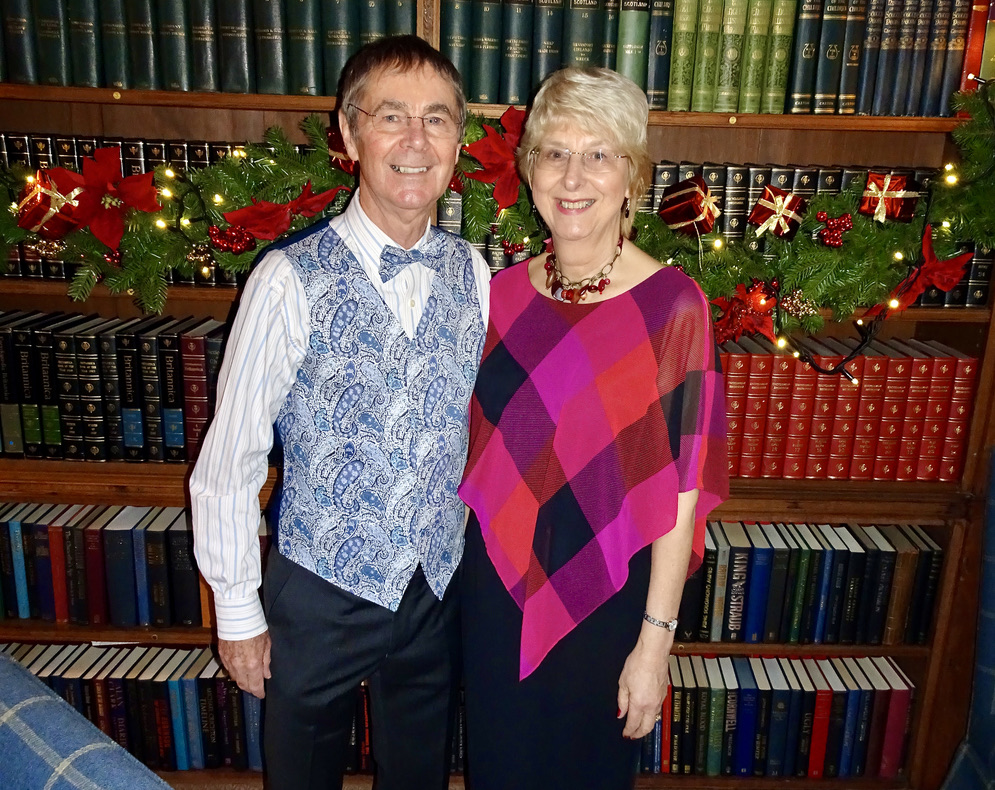
My husband, Bill, and I imagined ourselves doddering along till we reached our eighties. Beyond that was a mist, fading away. But in our mid-seventies all that changed. Bill was diagnosed with dementia.
‘I’m shocked,’ he said to the consultant. ‘I didn’t think anything was wrong.’
But I knew. For several years something had been niggling away at me. Something wasn’t quite right. Forgetfulness you can put down to ageing, but this was more than that. For our Golden Wedding in 2016, I’d bought printed badges bearing the names of all our guests, even having different-coloured backgrounds denoting whether they were family or friends. I thought it would benefit our guests, coming as they did from a variety of our interests and activities, even including Bill’s new family members, who he’d only discovered the previous year. But really it was because Bill couldn’t remember names.
I even moved us across the country to be nearer our sons ‘just in case’. It took me until 2019 to persuade him to visit the GP and at least ask about his ‘problem’.
What is dementia? Alzheimer’s, the most common form, is what people usually think of when dementia is mentioned. But there are over 200 types of dementia and more may well be discovered. Every patient is different; they have their own unique symptoms and presentation of the disease. And the symptoms change and evolve as the disease progresses.
At the moment there is no cure. Every few weeks there is a media fanfare as yet another new miracle drug is claimed as the panacea for dementia. What they actually mean is that the drug might slow down the progression of the illness if it is caught early enough. A big if. Getting an early diagnosis is not easy these days. Doctors seem to be loath to actually do all the tests required to be able to say with any certainty that dementia is present. Is money and lack of resources the problem?
And dementia is terminal. It may be a long slow deterioration or, as in Bill’s case, a rapid gallop towards the end. For him, there were almost exactly three years from diagnosis to death.
But instead, I’ll focus on Bill’s drive and determination to continue living, despite a doctor’s prognosis which gave him only 18 months, as it was in Bill’s nature to put his head down and charge at whatever he faced, however much it came back to knock him down again and again.
There are always two people involved in dementia: the sufferer and the carer. Much is spoken about help for people with dementia, but help for carers is much thinner on the ground. Although dementia sucks the personality out of the sufferer, it reduces the carer as well. Weeks, months, years of caring leave the carer in a state of limbo, neither a partner nor a professional carer, stuck between two states of being, unable to participate fully in the activities and hobbies they enjoyed before, with only the knowledge that ahead lies the death of the loved one and an emptiness beyond.

 Kirsty’s Kritturs had brought along a variety of intriguing creatures that had the children slightly cautious at first but then enthusiastically holding giant cockroaches, patting the Egyptian Uromastyx (or lizard to you and me) and peering in at the tarantula and the scorpion. And of course, stroking Richard the python. He was soft and quite cold so wasn’t really enjoying what passes for early summer here.
 ann burnett