Postman Pat – RIP

I was saddened to read of the death of John Cunliffe, the originator and author of Postman Pat. He first wrote about him in 1978 after a request from a BBC producer for a series for pre-school children set in the countryside. The series was an immediate success and many children delighted in watching Postman Pat and Jess, his black and white cat, as they drove on their rounds in Greendale meeting the inhabitants. There was Mrs Goggins who worked in the Post Office, the Reverend Timms, Granny Dryden and Ted Glen, the twins Katy and Tom Pottage and many more.20170413_124128_resized-1

John Cunliffe wrote all the books too, as well as a weekly Postman Pat story for the children’s comic, Buttons, but when the work became too demanding, I was called in to take over the weekly comic slot. For five years, I wrote a story a week, an enjoyable task as the characters he had created were so real and alive and believable. As I had two young sons at the time, much of what Postman Pat did was based on what we did, so when the boys had chickenpox, so did Postman Pat’s son Julian, and when we went on holiday or picked apples and brambles to make jam, so did Pat and the Greendale folk.P Pat
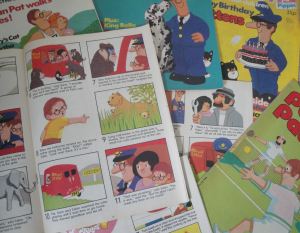
I wrote an article for a writing magazine about producing a Postman Pat story every week and shortly after, received a gentlemanly letter from John tactfully pointing out where I had gone wrong. I had misplaced Greendale from its origin in Cumbria over to the east coast but I was able to escape any censure as I had a letter from the editor revealing that it was she who had made the original mistake.

Postman Pat will live on even though his creator is no longer with us. The series is a worldwide success forty years on and shows no signs of losing popularity among the youngsters of today.

John Cunliffe has left a wonderful legacy for generations to enjoy.
Moving On….

Changes are afoot in the Burnett household; we are moving across country to the east of Scotland. A new house, a new town, a new area to explore, new friends to make…

All very exciting but breaking up a home where we’ve lived for nearly thirty years is hard work, both physical and emotional.

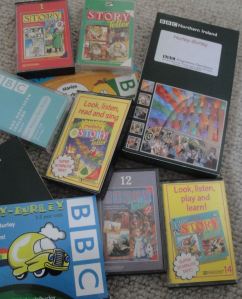
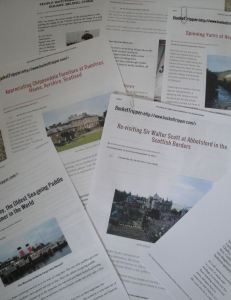
My office where I work, has had a good clear out of thirty years of writing.P Pat I’ll keep all my published work which at the moment fills almost an entire bookcase, what with the 250 Postman Pat comic scripts and annuals I wrote, the hundred or so BBC radio and TV programmes I scripted,  the numerous articles on all sorts of subjects I wrote for magazines and online sites, and the magazine short stories published here and abroad. And then there were the many writing workshops I ran and the materials I prepared for them.buckettrippertapes

But as well as the ‘successful’ pieces, there were very many more rejected manuscripts – hundreds of them in fact. For every piece I had accepted, there were ten ‘failures’ which I kept, just in case I could work on them or a market came up which would be suitable or because I didn’t want to throw them out.

Well, I have now. Reading them over, I can see exactly why they were rejected and I tossed them all out –  they weren’t worth saving after all.

I also found my first piece that I entered into a club competition many years ago and received a crit for. The adjudicator had attached a single line of type to my manuscript which said:

Hackneyed. Full of clichés. Subject has been done many times before.

I was devastated when I read that and almost gave up writing there and then. But it taught me a valuable lesson; temper your criticism with kindness and encouragement. Make it like a sandwich with some positive comments at the start, the meat on how the writer can improve it in the middle, and a final positive note of encouragement at the end. When I’ve been an adjudicator, I’ve always tried to do that. The memory of my first crit still rankles!

I’m looking forward to the newness of everything, home, area, friends, and hoping it acts as a stimulus to more writing. But first, there are a few more cupboards to empty. Let’s hope I don’t find any skeletons – or maybe, as a writer, I should look out for them. You never know where they can lead.