It’s just over a year since A Last Journey was published and it’s been quite a year. I’ve been busy giving talks and readings all over Scotland to dementia groups, carers, Meeting Centres, the University of the Third Age, and Probus. I’ve been on the radio and taken part in an online seminar at Dundee University.
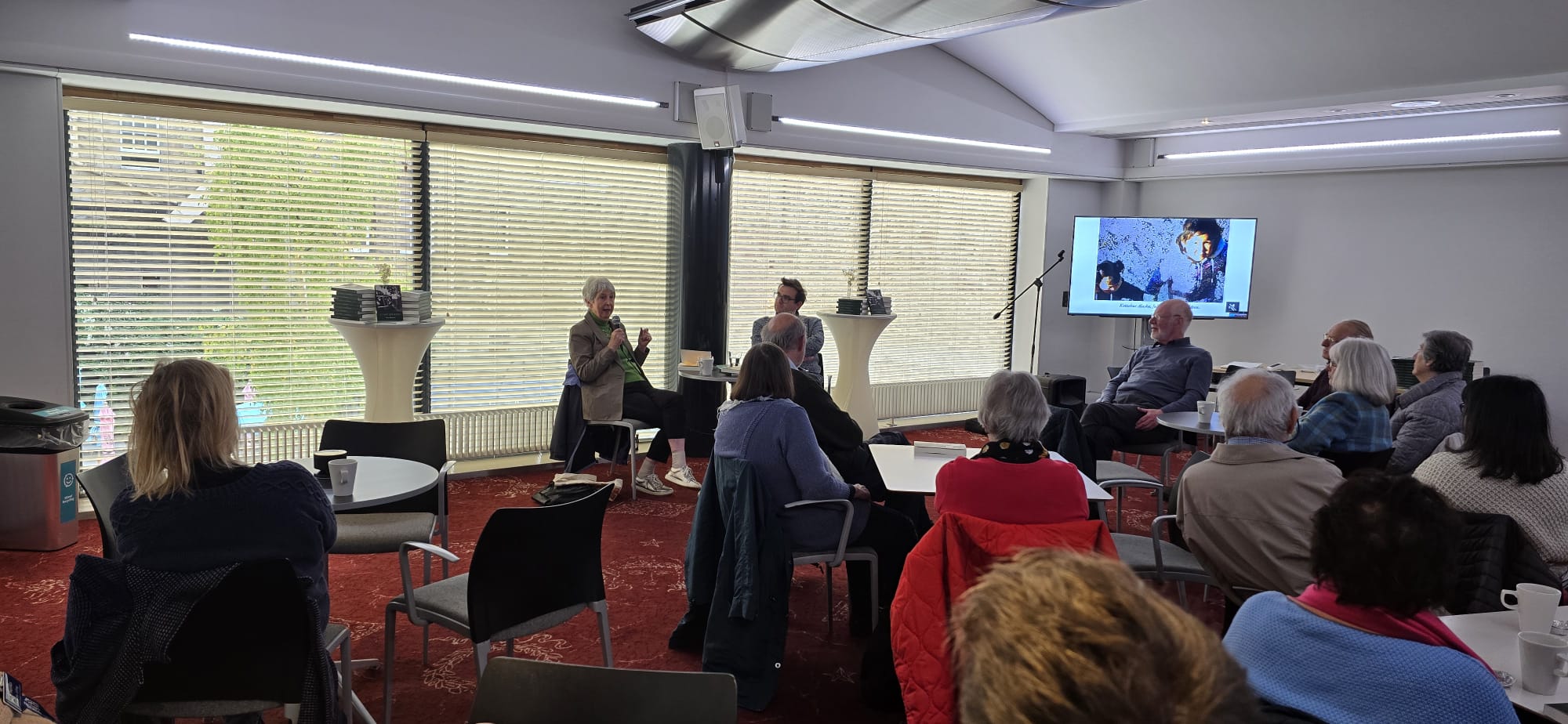
Setting up ready for a talk
My most recent talk was at Probus in Longniddry with a very receptive audience.
I’m also a member of Edinburgh Festival Theatre’s Focus group for their dementia programme and discuss and suggest ideas with them. I also write the Hidden Lives column for their DementiArts magazine.
And to add even more, I’m part of the Haddington singing group who entertain at care homes and other social groups throughout East Lothian.
No wonder it’s been a busy and very satisfying year!
Last weekend saw 150 writers from all over Scotland converge on the Westerwood hotel in Cumbernauld, near Glasgow, for a weekend of talks, competitions and workshops, good food, good company and a hell of a good time.
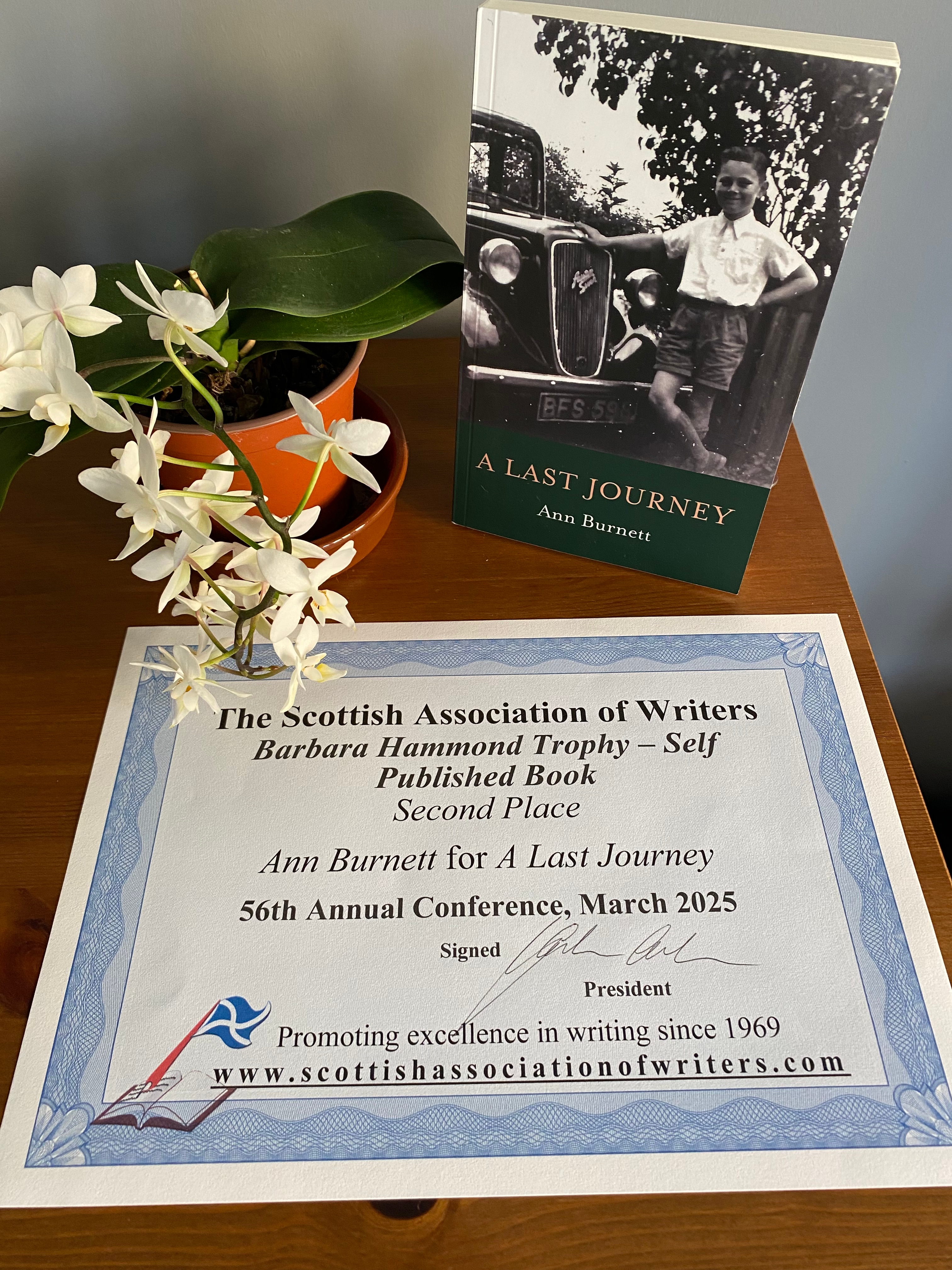
I was thrilled to be awarded second prize in the self-published book category for A Last Journey, my memoir of my husband’s struggles with dementia. Not only was it judged on content, but cover, blurb, layout, author bio and website.
It was great meeting up with many writing friends and catching up on news from around the country but now it’s back to ordinary life, if it can be classed as that. I completed my adjudication of Ayr Writers Club’s Scottish article competition and am preparing for my talk next month to carers in Dunbar.
As to Chatbots – I hate them. I’m trying to arrange car insurance, TV and broadband and heating providers and I can never talk to a human. Nuff said.
I found Bill’s old train set when clearing out recently. He’d had it from the early 50″s and like everything else he had, took very good care of it. So the trucks were in their original boxes and the engines wrapped in tissue paper. Other engines and coaches looked more modern and apparently had belonged to my son.
It made me think of some of the train journeys Bill and I had taken over the years. One of the longest, and straightest, was the Indian-Pacific across Australia in 1975. We joined it at Port Pirie and spent almost three days travelling across the Nullabor in South Australia and West Australia until we reached the Pacific Ocean at Perth. The Nullabor is a vast empty desert where there are few people bar the railway workers and their families living in cottages beside the track and who rely on the train for supplies and company. It’s a tough life; the children learn through the School of the Air which delivers their lessons through originally radio but which now has video links. If they need medical help, then the Flying Doctor will come to them if necessary or the train will deliver medicines to them.
In complete contrast is the Shinkansen, the Japanese bullet train, which can travel at up to 320kph (about 200 mph). We travelled on them when touring Japan in 2015. Very comfortable, extremely punctual and even stopping at the designated carriage markings at the station so you queued at the part where you knew you were seated. And the bento box meals were fascinating and delicious!
One of the most recent trains I travelled on was without Bill, at a new stage of my life. It was a funicular railway in Budapest in 2023 where I had met up with old friends from our Canadian days. Short and very steep but which saved a long climb up the hills above the city with spectacular views from the top.
It’s lovely to look back at some the journeys we made and the places we visited and all because I was doing some clearing out!
Bill earned many medals during his life for running in races of various lengths. He was most proud of the ones he gained for marathons, including two London ones. One of those medals was buried with him.
But there were many others; some at the beginning of his racing career were only for 5k or 10k lengths but as he became fitter and more experienced he ran longer ones, including many half marathons and culminating in full 26 mile marathons.
Despite his healthy lifestyle, dementia caught up with him and although he gave it everything he could to beat it, it won.
Read about his life in A Last Journey. It’s available from Lumphanan Press or from Amazon but without all the amazing photos!
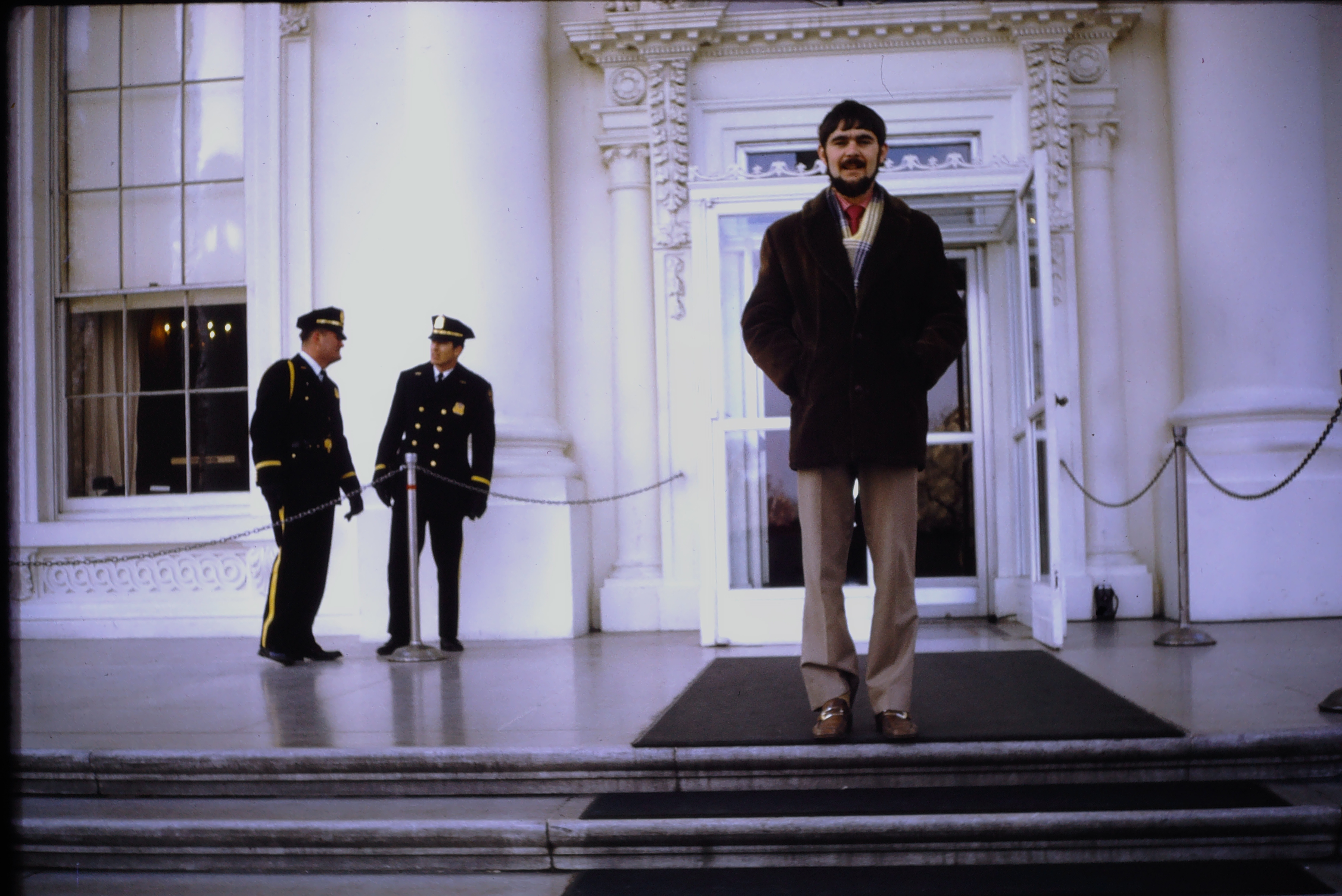
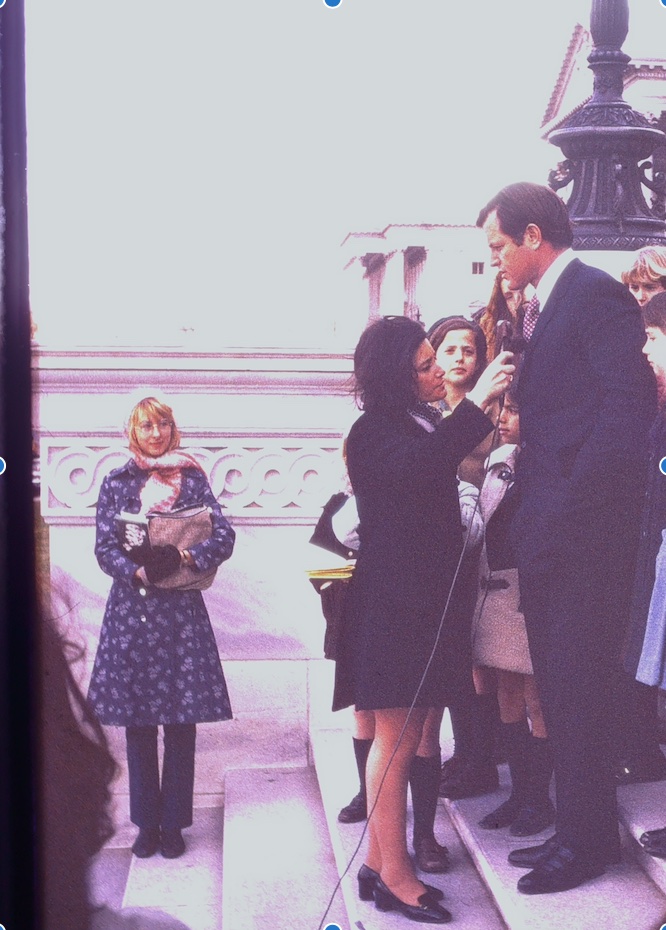
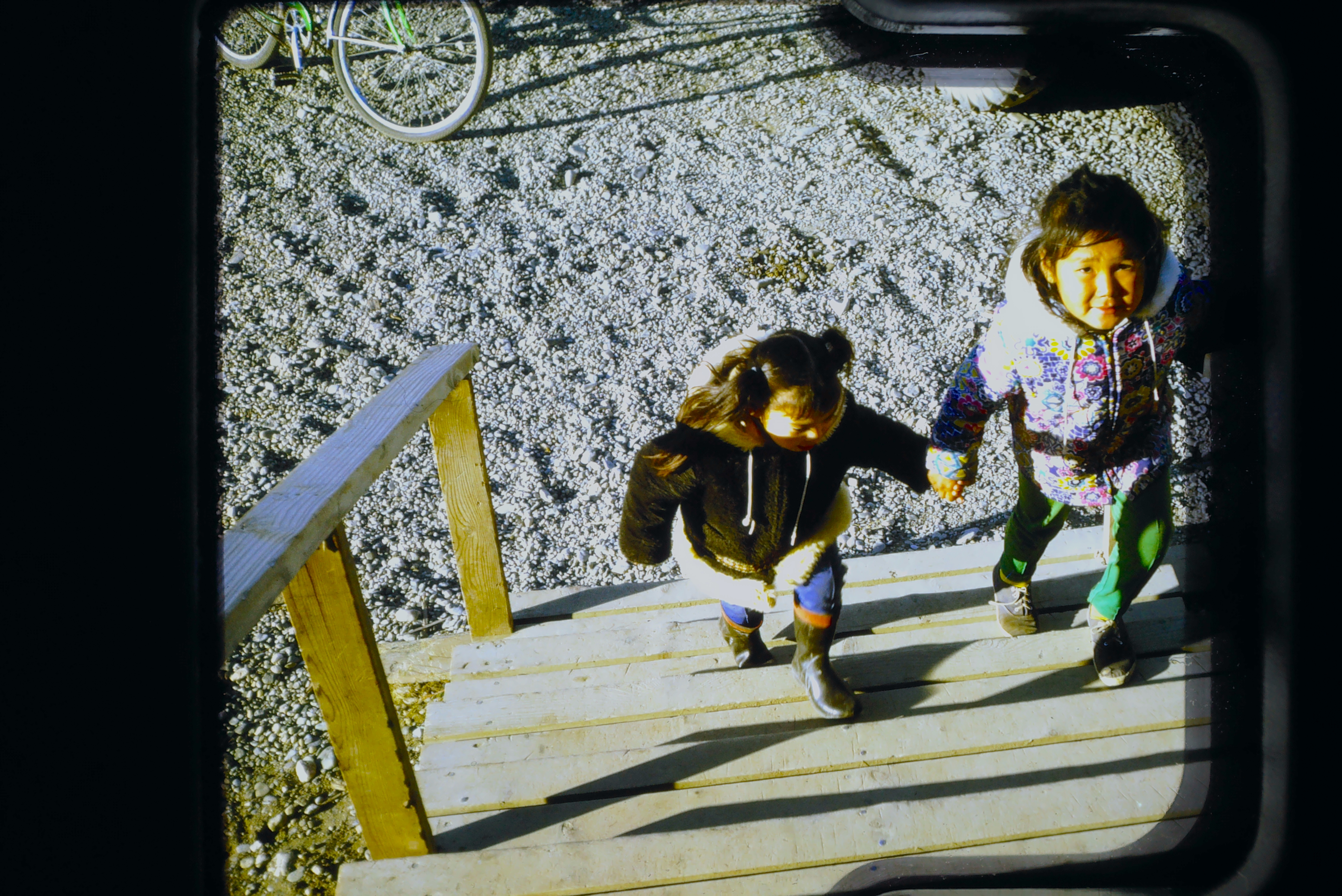
Those of you who have bought A Last Journey on Amazon are missing the photos which are in the printed book available from Lumphanan Press. So I thought I’d put up a selection of them for you to see. Here are some from visits to the USA in the 70s.
Bill outside the White House main entrance
Me watching Teddy Kennedy giving an interview on the Capitol Steps.
Screenshot
Inuit Children in Kotzebue, Alaska, situated above the Arctic Circle
The slides are now so old that they are not as bright or as clear as they were when they were taken in the early 70’s.
This is the story of our lives abroad and home in Scotland before Lewy Body Dementia got its claws into Bill and destroyed his life.
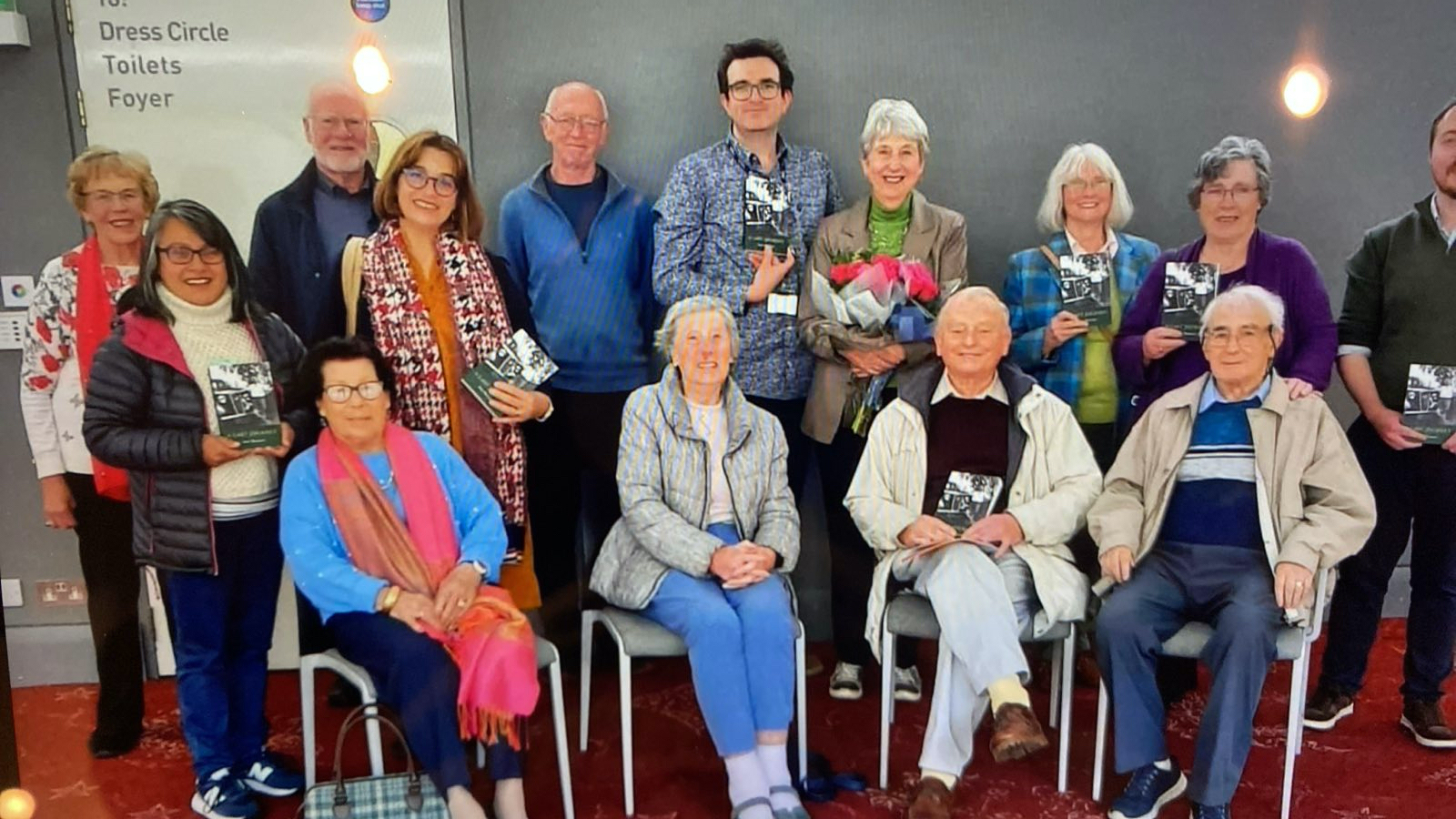
The launch was held at the Festival Theatre, Edinburgh where friends and family gathered to hear me talk about the book and how it came about. Alex Howard, Creative Engagement Coordinator for the theatre was the emcee and introduced the readings and took questions from the floor.
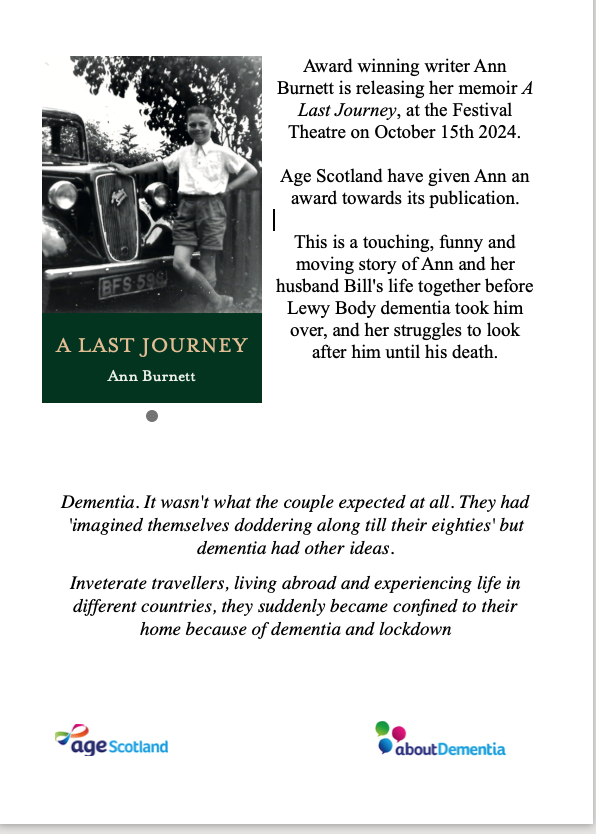
Award winning writer Ann Burnett is releasing her memoirA Last Journey, at the Festival Theatre on October 15th 2024.
Age Scotland have given Ann an award towards its publication.
This is a touching, funny and moving story of Ann and her husband Bill’s life together before Lewy Body dementia took him over, and her struggles to look after him until his death.
Dementia. It wasn’t what the couple expected at all. They had ‘imagined themselves doddering along till their eighties’ but dementia had other ideas.
Inveterate travellers, living abroad and experiencing life in different countries, they suddenly became confined to their home because of dementia and lockdown
Just a wee bit from my memoir, A Last Journey, to be published in October. It’s from the introduction.
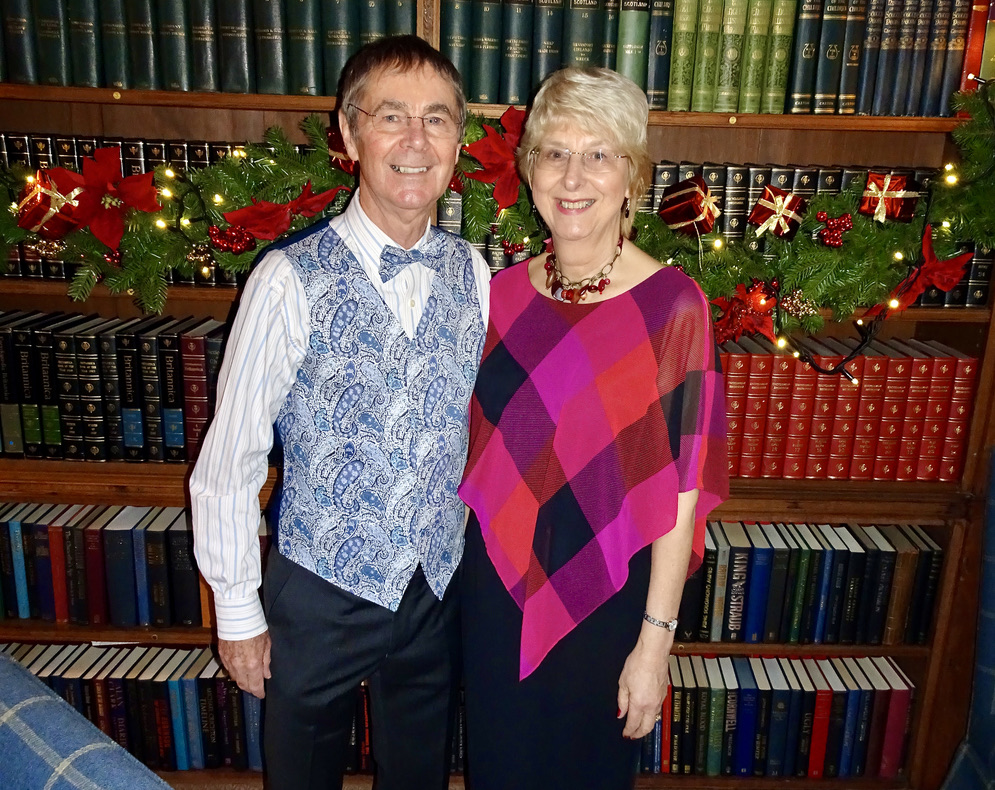
Our Golden Wedding in Dumfries House, 2016
My husband, Bill, and I imagined ourselves doddering along till we reached our eighties. Beyond that was a mist, fading away. But in our mid-seventies all that changed. Bill was diagnosed with dementia.
‘I’m shocked,’ he said to the consultant. ‘I didn’t think anything was wrong.’
But I knew. For several years something had been niggling away at me. Something wasn’t quite right. Forgetfulness you can put down to ageing, but this was more than that. For our Golden Wedding in 2016, I’d bought printed badges bearing the names of all our guests, even having different-coloured backgrounds denoting whether they were family or friends. I thought it would benefit our guests, coming as they did from a variety of our interests and activities, even including Bill’s new family members, who he’d only discovered the previous year. But really it was because Bill couldn’t remember names.
I even moved us across the country to be nearer our sons ‘just in case’. It took me until 2019 to persuade him to visit the GP and at least ask about his ‘problem’.
What is dementia? Alzheimer’s, the most common form, is what people usually think of when dementia is mentioned. But there are over 200 types of dementia and more may well be discovered. Every patient is different; they have their own unique symptoms and presentation of the disease. And the symptoms change and evolve as the disease progresses.
At the moment there is no cure. Every few weeks there is a media fanfare as yet another new miracle drug is claimed as the panacea for dementia. What they actually mean is that the drug might slow down the progression of the illness if it is caught early enough. A big if. Getting an early diagnosis is not easy these days. Doctors seem to be loath to actually do all the tests required to be able to say with any certainty that dementia is present. Is money and lack of resources the problem?
And dementia is terminal. It may be a long slow deterioration or, as in Bill’s case, a rapid gallop towards the end. For him, there were almost exactly three years from diagnosis to death.
But instead, I’ll focus on Bill’s drive and determination to continue living, despite a doctor’s prognosis which gave him only 18 months, as it was in Bill’s nature to put his head down and charge at whatever he faced, however much it came back to knock him down again and again.
There are always two people involved in dementia: the sufferer and the carer. Much is spoken about help for people with dementia, but help for carers is much thinner on the ground. Although dementia sucks the personality out of the sufferer, it reduces the carer as well. Weeks, months, years of caring leave the carer in a state of limbo, neither a partner nor a professional carer, stuck between two states of being, unable to participate fully in the activities and hobbies they enjoyed before, with only the knowledge that ahead lies the death of the loved one and an emptiness beyond.








 ann burnett