I found Bill’s old train set when clearing out recently. He’d had it from the early 50″s and like everything else he had, took very good care of it. So the trucks were in their original boxes and the engines wrapped in tissue paper. Other engines and coaches looked more modern and apparently had belonged to my son.
It made me think of some of the train journeys Bill and I had taken over the years. One of the longest, and straightest, was the Indian-Pacific across Australia in 1975. We joined it at Port Pirie and spent almost three days travelling across the Nullabor in South Australia and West Australia until we reached the Pacific Ocean at Perth. The Nullabor is a vast empty desert where there are few people bar the railway workers and their families living in cottages beside the track and who rely on the train for supplies and company. It’s a tough life; the children learn through the School of the Air which delivers their lessons through originally radio but which now has video links. If they need medical help, then the Flying Doctor will come to them if necessary or the train will deliver medicines to them.
In complete contrast is the Shinkansen, the Japanese bullet train, which can travel at up to 320kph (about 200 mph). We travelled on them when touring Japan in 2015. Very comfortable, extremely punctual and even stopping at the designated carriage markings at the station so you queued at the part where you knew you were seated. And the bento box meals were fascinating and delicious!
One of the most recent trains I travelled on was without Bill, at a new stage of my life. It was a funicular railway in Budapest in 2023 where I had met up with old friends from our Canadian days. Short and very steep but which saved a long climb up the hills above the city with spectacular views from the top.
It’s lovely to look back at some the journeys we made and the places we visited and all because I was doing some clearing out!
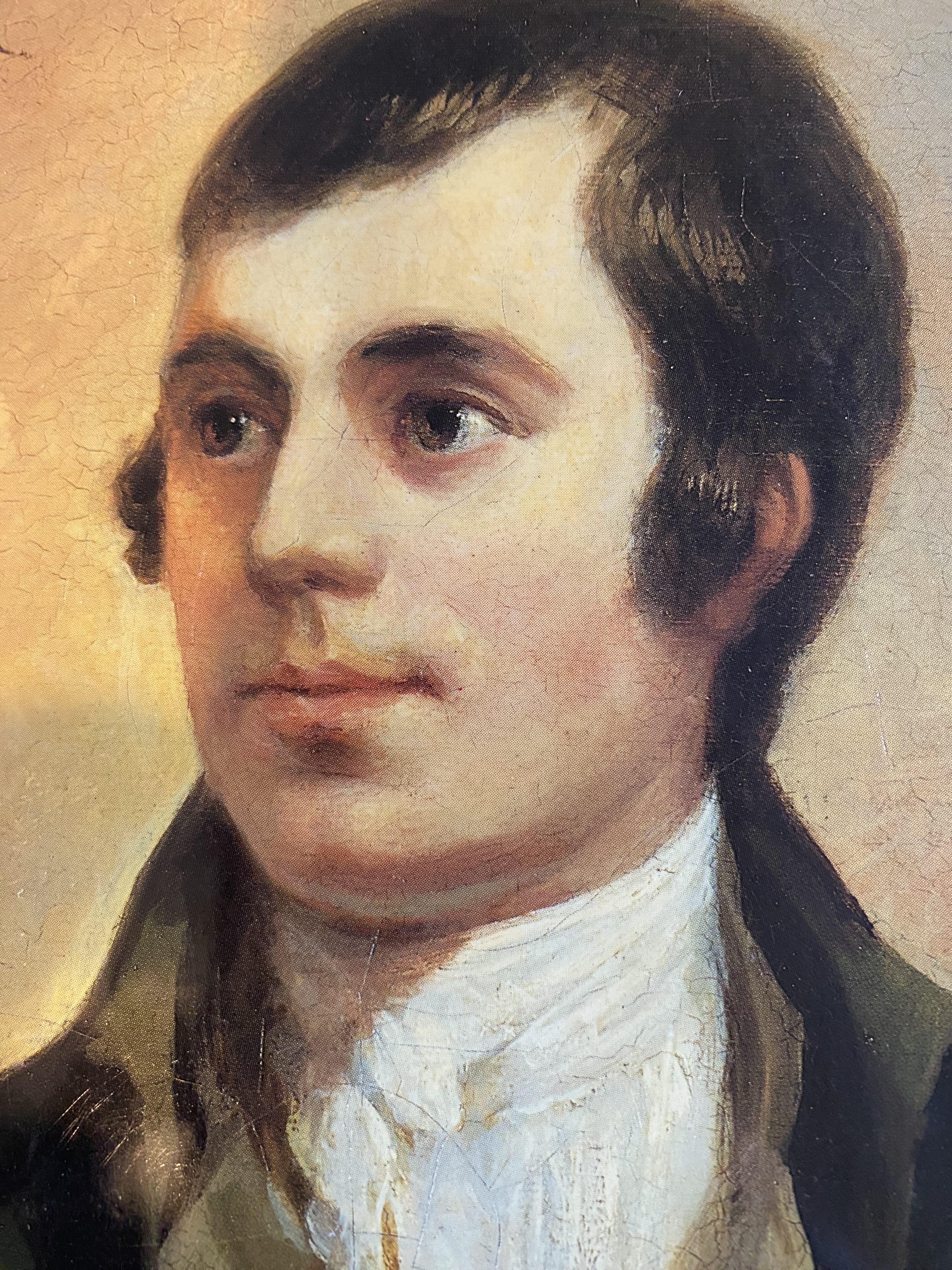
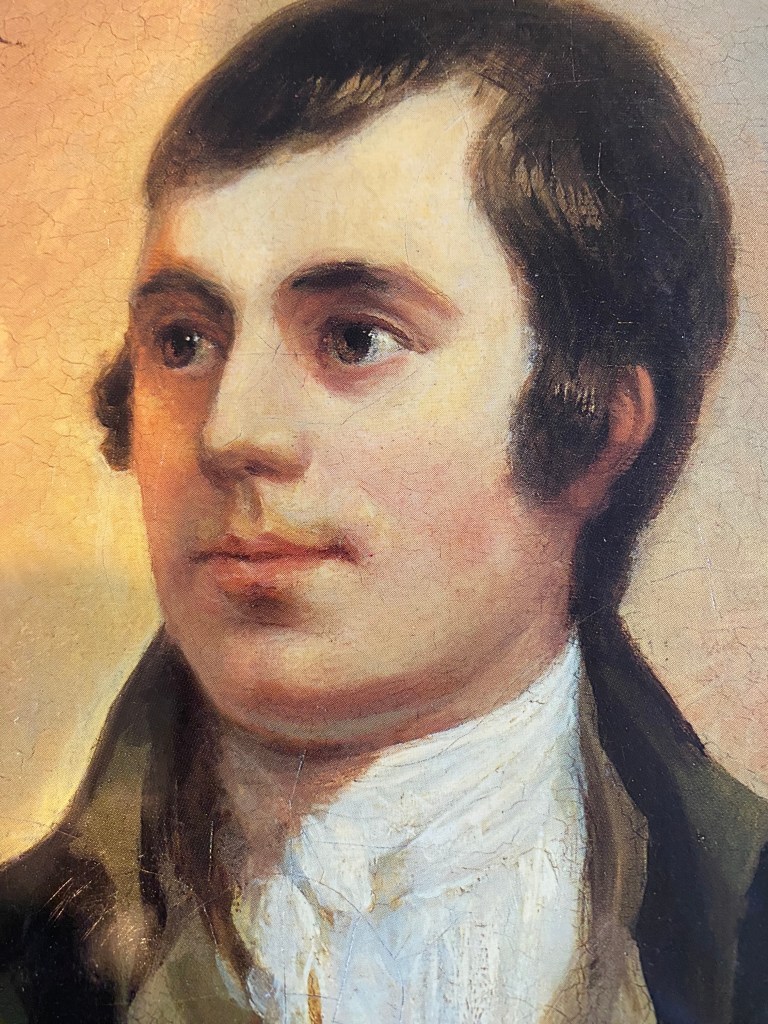
January 25th 1759 was as stormy as it is today and Burns celebrated it by writing
Twas then a blast o’ Janwar’ win’ Blew hansel in on Robin.
Burns Suppers are now held all over the world and here’s a bit from my book A Last Journey where we attend an unusual Australian Burns’ Supper.
The trouble was, we weren’t Scottish enough. We had only been in Penola a day when a man called round to ask Bill to join the local pipe band. His face registered incomprehension when Bill confessed to being unable to play the bagpipes.
‘But I thought you were Scottish,’ he spluttered.
These inhabitants of the small South Australian town turned out to be more Scottish than us. Penola had been settled in the 1840’s by waves of English, Irish and Scots immigrants drawn to the offers of free land. Alexander Cameron from Lochaber was the first, setting up Penola Station in 1844. Another, John Riddoch from Turriff, had first gone to the goldfields to make his money. In 1861, he had come to the area where he had bought 35,000 acres. He had recognised the importance of the red earth, the terra rossa, for growing grapes and encouraged the settlers to plant vines. His foresight ensured the prosperity of the area, Coonawarra wines now being world class.
But there was a price the settlers had to pay. The older part of graveyard in Penola was filled with the graves of those first immigrants. Young men and women who had come from Tain and Aberfeldy, Dumfries and Lewis. Their infant children of whom there were many, and their older children who had managed to survive the difficult first five years only to die of some fever or snakebite or accident with the cattle. It made hard reading. Some names were still evident in the town – McLeod and MacKay, Meikle and Burns. Their descendants still lived in Penola, if perhaps not wealthy, then managing to live a reasonable life far beyond the dreams of their ancestors.
They kept up the old traditions too. Or at least, they had versions of them, passed down through generations and adapted and modified to meet the circumstances.
So it was that we found ourselves at a Burns Supper one November 30th. It was early summer and already the temperature had risen into the nineties and stayed there well into the evening. Bill, despite his inabilities musically, had been asked to do the Address to the Haggis. He wasn’t keen. He had never been to a Burns Supper. He had never read much of Burns apart from having to learn To a Mouse for a school poetry competition in Primary 5. He had left Scotland to get away from the kitsch of tartan and shortbread. I had to dragoon him into accepting.
The evening began in the local Church of Scotland with communal singing. We started with On the Bonny Banks of Lock Lo-mont, followed by It’s a Long Way to Tipperary and climaxing with Danny Boy. Eclectic and surprisingly good fun given the setting. We then retired to the church hall where Bill was to do his piece. Dressed as he was in his best pale blue zoot suit, he was only slightly put out to see that he was the only male not in the kilt. He didn’t possess one. He had never even hired one. He had no intention of ever wearing one.
However he did his part with remarkable aplomb. The piper led the procession in (was that the job they had hoped he’d fill?) and the haggis followed in tartan splendour. It was set in front of him and he recited the verses with the assistance of the crib cards I had prepared for him. (‘What on earth does it all mean? I don’t understand a word of it.’ ‘Just learn it, will you?’)
Bill stabbed the haggis with the kitchen knife provided (it went in with a satisfying splurch) and duly mangled the beast. It was then taken away and to our surprise, the buffet began. Sandwiches, chicken legs, sausage rolls, salad, all followed by the best Australian pavlovas, sickly sweet and soft and drenched with cream.
Then came the haggis. On cocktail sticks. And mercifully in bite size pieces. After the tooth rotting pavlova, it tasted, well, out of place. Some of the guests refused to touch it, treating it like some outlandish foreign muck. As it is. In Australia at any rate.
The night gave us many a laugh in the forthcoming months. How those daft Aussies didn’t know how or when to hold a Burns Supper. How they couldn’t tell the difference between the Scots and Irish heritage. Conveniently, we forgot our own ignorance and denial of Scotland.
Time, maturity, whatever, have lessened our ribaldry. Have given us an understanding of what it meant. It wasn’t a celebration of Burns, or of Scotland. It was an act of remembrance of all those names in the graveyard. Of James McLeod from Lewis, of Robina Meikle from Tain, of countless, nameless, infant children. Of all those brave souls who had set out from Scotland to face the unknown. Who had left behind family and friends, knowing that the chances of ever seeing them again were virtually nil. Who were prepared to face great hardship in order to attempt to forge a better life for their families.
They had a long hard struggle in a strange environment where nothing existed that they were familiar with. No identifiable trees or animals, save those they brought with them. No rains or mists or mountains or stretches of open sea or lochs. No blackbird song or gulls’ cry, no gaelic save their own speech, no tales but those they told themselves.
Is it any wonder they clung to the familiar traditions and habits? That they tried to keep burning that which identified them as Scottish?
So on each Burns Night, I raise my glass to them, to those pioneers who showed such bravery and strength and resolution. I celebrate the character of those long dead Scots and the legacy they left behind.
This is the story of our lives abroad and home in Scotland before Lewy Body Dementia got its claws into Bill and destroyed his life.
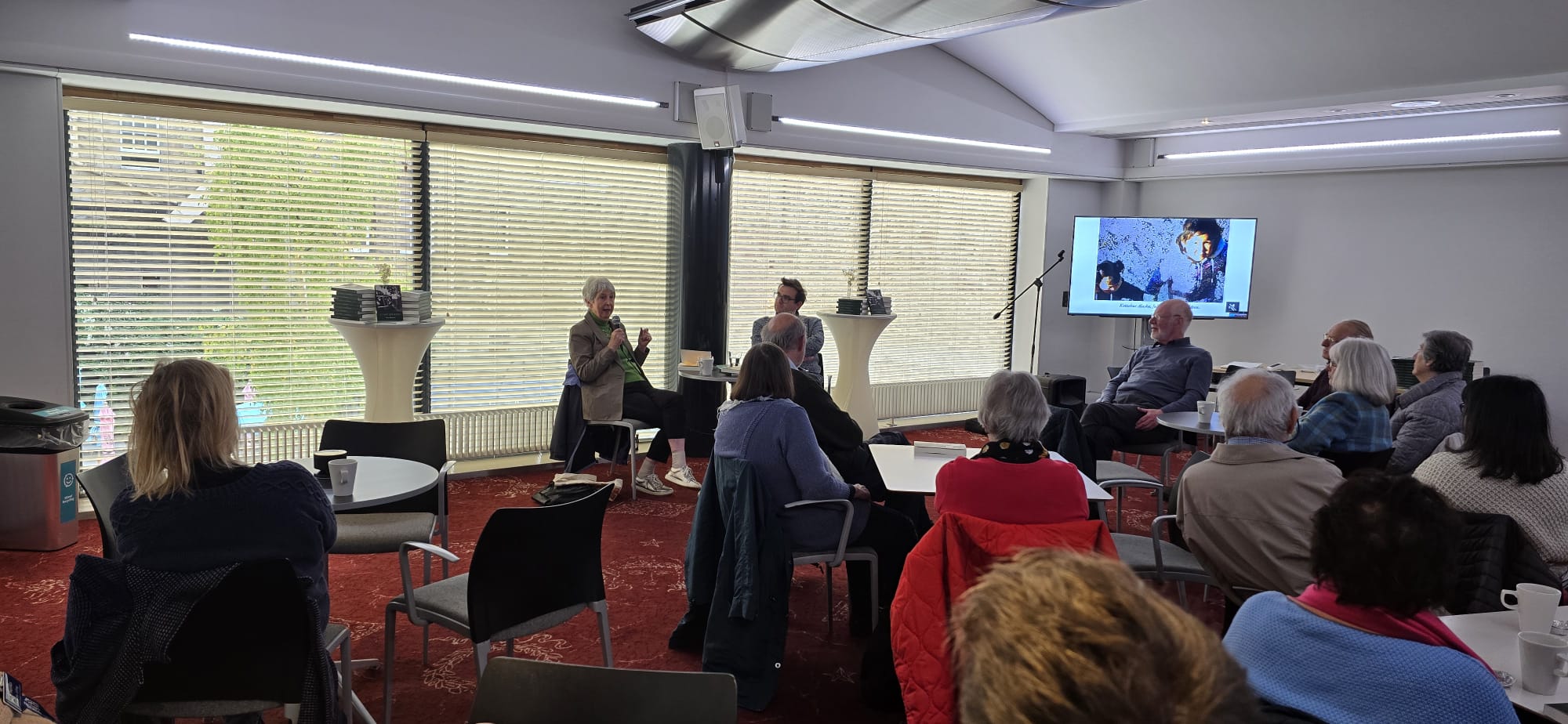
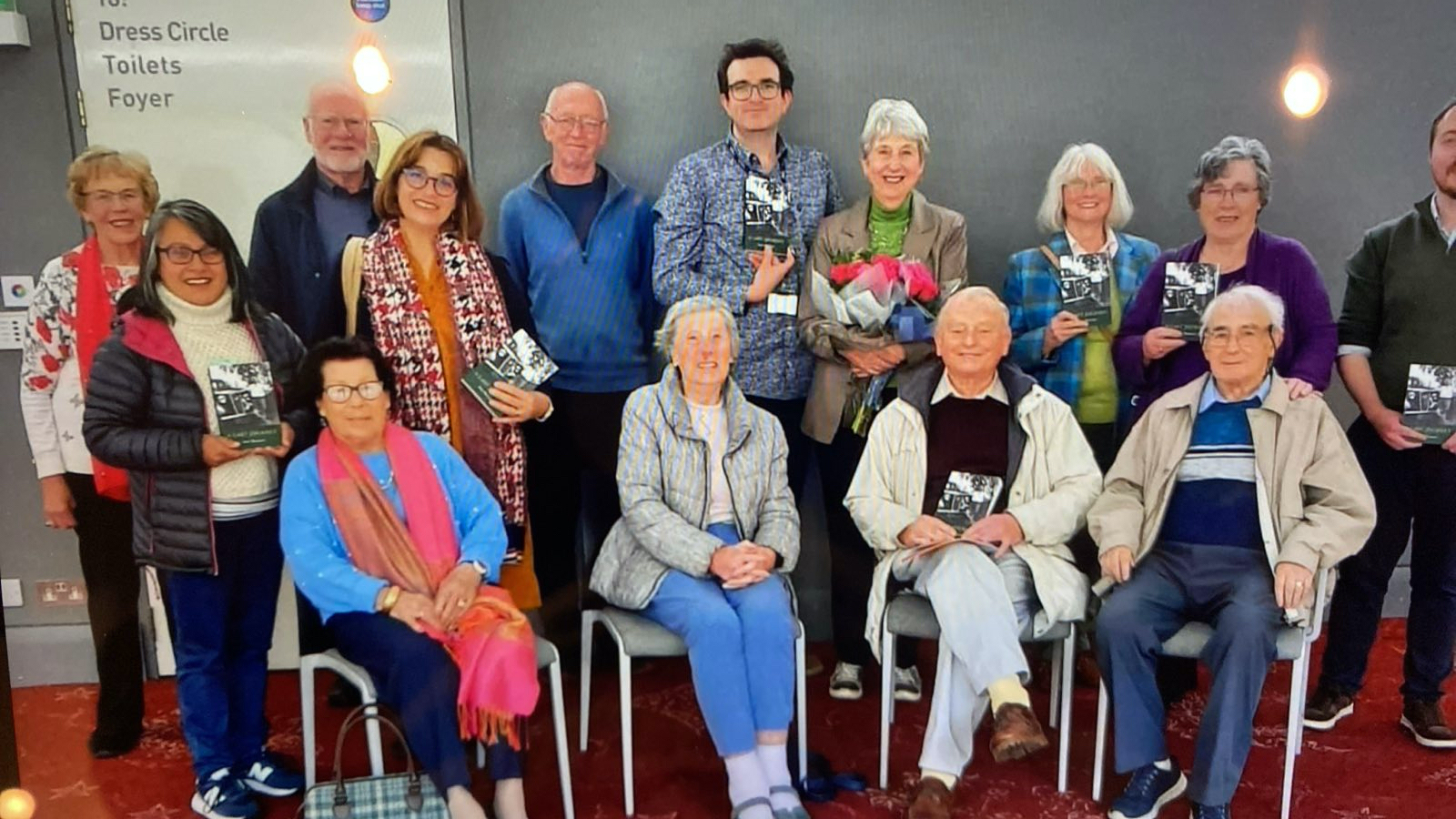
The launch was held at the Festival Theatre, Edinburgh where friends and family gathered to hear me talk about the book and how it came about. Alex Howard, Creative Engagement Coordinator for the theatre was the emcee and introduced the readings and took questions from the floor.
I thought for a change I’d post one of my short stories that I had published. This one was in an Australian magazine and I was delighted to buy a copy in a New Zealand newspaper shop where we were holidaying at the time. The photo, no prizes for guessing, is Sydney Harbour Bridge which we have driven across, walked across and climbed to the top of.
There’s a First Time for Everything
“Is this your first?” I say.
She nods and chews her bottom lip. She is just so nervous. I try to think of ways to calm her. I put my hand on top of hers. It’s cold and there’s a tremor which she’s trying to conceal.
“Don’t worry. Everything will be fine, you’ll see. It’s an everyday thing; hundreds of people are doing it, no problem.”
She nods again and this time a glimmer of a half smile flickers over her features. She’s so young, it makes me feel ancient, though forty isn’t nowadays. Her pale skin has a flare of spots round her mouth as if she’s been touching them and spreading them around. Fine, mousy blonde hair falls over her eyes and her cheeks and I want to tell her to pin it back so that she can see clearly.
As if I’ve spoken aloud, at that moment she digs into the pocket of her coat and pulls out a blue sparkly hair-band. It’s so little-girlish I can’t help smiling. She drags it over her forehead, capturing the wayward strands of her hair and revealing a high forehead which she’s obviously been trying to cover up. She looks even younger, like a modern day Alice. I grin at her, aware that I probably look like the Cheshire Cat to her, my teeth revealed in the rictus of my smile. I’m not feeling terribly confident myself.
“I don’t want it to hurt,” she stammers. “That would be awful.”
“It won’t,” I reassure her. “Not nowadays with all those new drugs and things. Before, it used to hurt something terrible, but that’s all past. It’s all quite painless now.” I hope she doesn’t notice my crossed fingers behind my back. I can’t stand pain and I certainly don’t want to even think about it.
“I hope it won’t take too long,” she says and her voice has disappeared to a whisper. Her hands are shaking even more.
“It will be over before you know it,” I say. I take hold of both her hands to still the trembling. “Stop worrying. You’ll be fine, believe me.”
“Excuse me.” She jerks her hands away. “I have to go to the loo.”
She rushes out and leaves me alone. I look around at the equipment waiting to be used. It’s all clean and sterile, instruments neatly lined up in their plastic wrappers, Through the frosted glass of the window I can just see the vague shape of the chestnut tree in the driveway. The candles on it are large and white and pregnant with fruits to come. The branches quiver in the freshening breeze. They remind me of her hands.
When she returns, there are two red spots on her cheeks but she looks calmer.
“Feeling better?” I ask.
“Yes, thanks. It’s my first time, you see, and I don’t want to make a fool of myself.”
“You won’t,” I reassure her. “You’ll see. You’ll soon get used to it. I have every confidence in you.” But I don’t. Not with shaky hands like that.
“Take some deep breaths,” I suggest. “They’re supposed to be calming.” So she deep breathes for a few minutes, her chest rising and falling as she does. I frantically think of other ways of helping her to relax.
“Exercise,” I say. I’ve read somewhere that exercising releases endorphins which calm you down. “Couldn’t you run round the block? Do press-ups? Touch your toes ten times?”
She’s looking at me as if I’m demented, which I admit, I’m getting close to. It’s those shaky hands. I have to drag my mind back from the horrible pictures they’re trying to sneak into my brain.
I’m just about to run out of the room myself when the door opens and a man in a white coat enters.
“Good morning Mrs Brown,” he says to me. “I’m here to supervise Janine as she does her first filling. We don’t want anything to go wrong, do we?”
“No,” we both chorus wholeheartedly.
I lie back in the dentist’s chair and watch as Janine reaches for the drill. Her hands are steady as a rock. I relax and close my eyes.
Not that any of us can go to the dentist these days! Keep safe, keep well and may your teeth stay healthy!
Those of you who follow my author page on Facebook will have read that I am re-issuing my contemporary Scottish romance, Festival Fireworks, under my own imprint, Ladybug Publications.
It will not only be published as an ebook but also a paperback with a new cover. The story is mainly set in Edinburgh with a trip to Australia as well, as Jill and Andrew try to keep their romantic fireworks from blowing up in their faces, helped or hindered by agony auntie Linda.
So save your Christmas Book tokens for the New Year and watch this space for when it becomes available.
In the meantime, enjoy the festive season however you choose to spend it and may your stocking be filled with lots of books to read!






 ann burnett